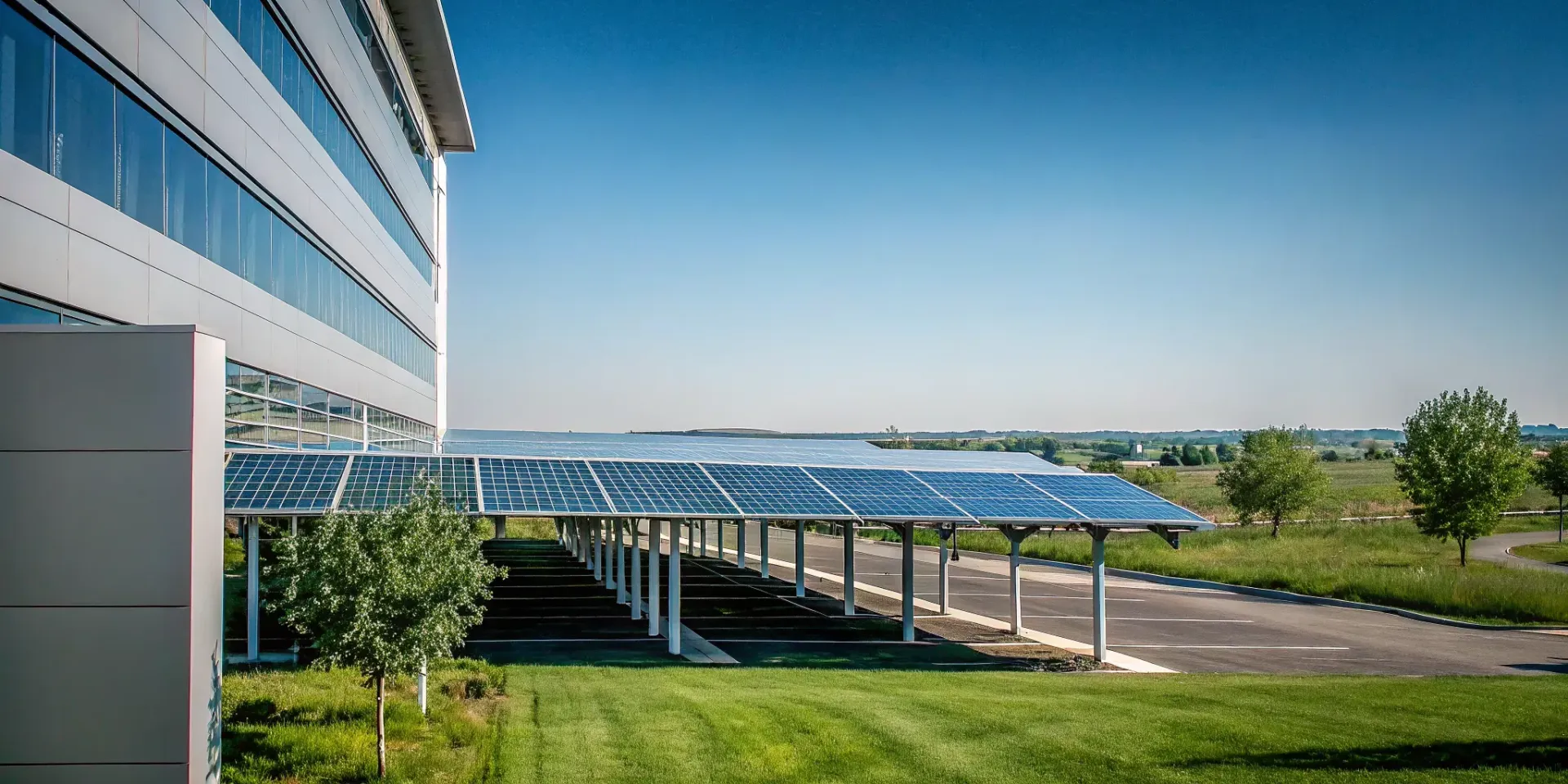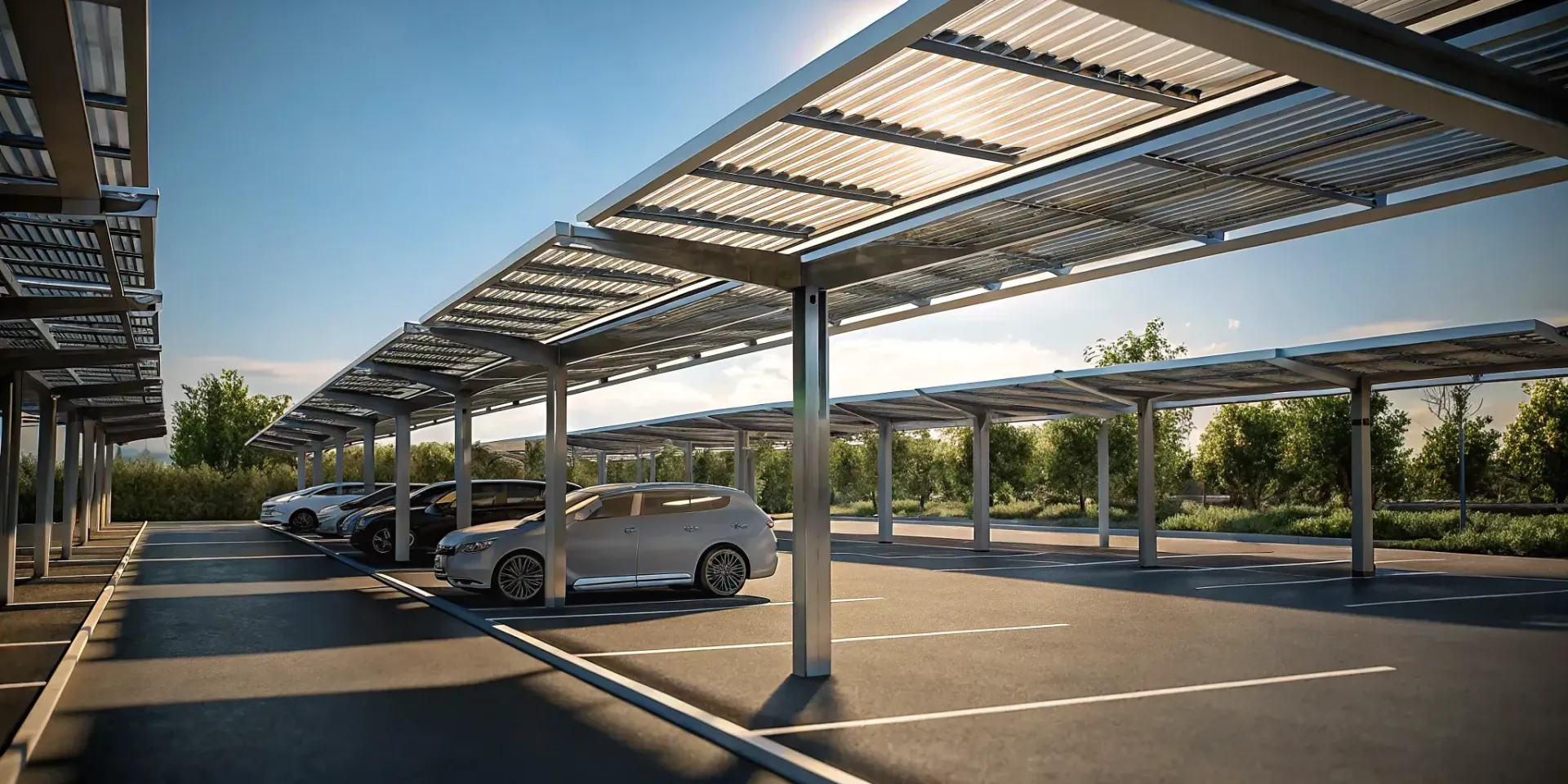
Solar Panel ROI for Commercial Real Estate in Kansas
This is a subtitle for your new post

For a commercial property owner, solar is not simply an energy upgrade. It is a capital decision that should compete on the same terms as a roof replacement. HVAC project, or other building investment: upfront cost, annual savings, tax treatment, financing, and effect on asset value.
Solar panel ROI for commercial real estate depends on the building's load profile, utility rates, system cost, financing structure, and available incentives. In Kansas, commercial clients commonly see payback in about 5 to 8 years. While combining the 30% federal Investment Tax Credit with accelerated MACRS depreciation can cover roughly 50% to 60% of installation costs.
The strongest proposals are built from the property's actual electricity use, roof area, and operating priorities, not a generic production estimate. For Wichita-area owners, that means testing how tax benefits, energy savings, and utility rules work together before committing capital. The financial case starts with the numbers that determine whether the project improves cash flow and long-term property performance.
Solar Panel Roi For Commercial Real Estate: The Financial Case for Commercial Solar
For a commercial real estate owner, solar deserves the same scrutiny as a roof replacement, HVAC upgrade, or tenant improvement. The question is not whether the system looks sustainable. It is whether the capital deployed today produces measurable savings, supports the building's operating performance, and fits the property's hold period.
Kansas offers a workable production environment for that analysis. The state receives approximately 4.5 to 5.5 peak sun hours per day, giving a properly designed array a meaningful production base. In Evergy territory, commercial customers can receive 1:1 net-metering credits for excess generation, with monthly rollover. That treatment can improve the value of electricity produced beyond the building's immediate load. Confirm the applicable tariff and project rules during due diligence because utility treatment is a core input to the financial model.
Tax treatment changes the upfront math
The federal Investment Tax Credit can cover 30% of an eligible commercial solar system's cost. The system may also qualify as five-year MACRS property, with accelerated depreciation affecting taxable income early in the asset's life. Together, the ITC and MACRS treatment can reduce the effective cost by roughly 50% to 60%, according to Barkley Solar's customer guidance. Tax benefits depend on ownership structure, tax liability, placed-in-service timing, and current law, so your CPA should validate the assumptions before approval.
Compare solar with the rest of the capital plan
Solar is most compelling when measured against the alternatives, not evaluated in isolation. A cosmetic renovation may support leasing, while a roof replacement protects the asset. Solar can do both only when the roof, electrical service, load profile, and tenant plan support the design. Research from NREL identifies electricity prices, building type, and load profile as major drivers of commercial photovoltaic economics. A proposal should therefore show production, avoided utility costs, incentives, financing costs, and sensitivity to rate changes rather than rely on a generic savings estimate.
Buildings spending $25,000 or more each year on electricity are strong candidates for this review. Barkley Solar's typical commercial guidance places payback around five to eight years, although the actual result depends on usage, roof conditions, utility rates, incentives, and project structure. For Wichita-area owners, the next step is a building-specific model that shows when the savings recover the investment and what value remains over the property's hold period.
Learn more about commercial solar installation and request an analysis based on your building's actual utility data.
How Solar Boosts Net Operating Income and Property Value
For a commercial property owner, solar creates value through a mechanism that is easy to model: it lowers an operating expense, which increases net operating income (NOI). The effect is not limited to the monthly utility bill. A building with more predictable energy costs can also be easier to lease, retain tenants in, and position for a future sale.
The NOI math behind solar panel ROI for commercial real estate
Every dollar removed from recurring electricity expense generally adds one dollar to annual NOI. Assuming the savings flow through to the property rather than being offset by another expense. At a typical capitalization rate of 6% to 8%, that additional NOI can add approximately $10 to $15 to the property's indicated value. Here is how different savings levels affect valuation.
- $10,000 in annual electricity savings can support roughly $125,000
to $167,000 in value.
$25,000 in annual savings can support roughly $312,500 to $416,700 in value.
$50,000 in annual savings can support roughly $625,000 to $833,300 in value.
This is a valuation framework, not a guaranteed sale-price increase. The actual result depends on the property's cap rate, lease structure, remaining system life, financing, maintenance, and how a buyer underwrites the solar asset. The U.S. Department of Energy's Better Buildings Solution Center identifies reduced operating expenses and predictable long-term energy savings as ways solar PV can add value to commercial assets. Review its PV valuation guidance when building an underwriting model.
Turning unused roof area into a productive asset
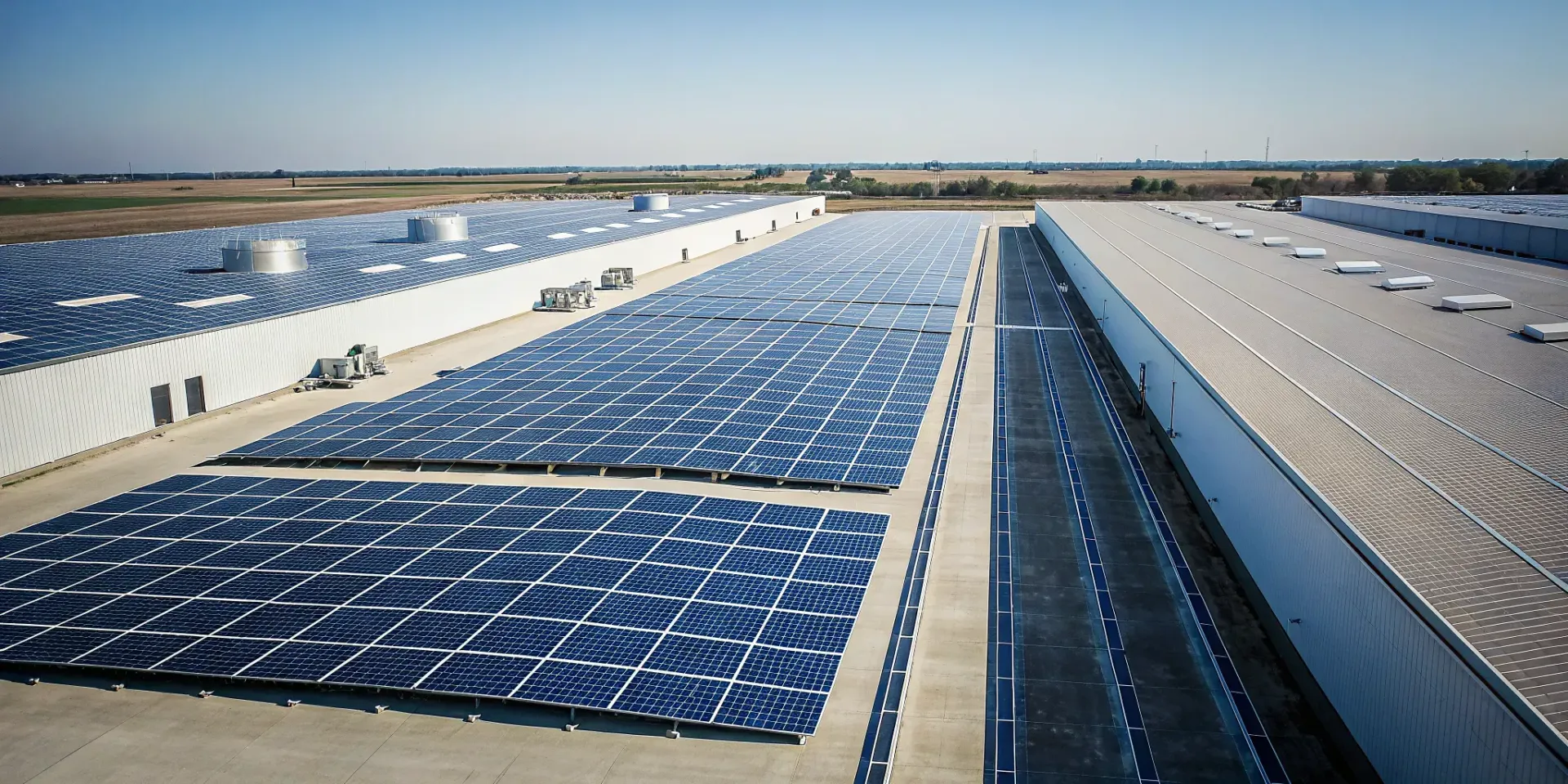
Industrial and warehouse properties often have extensive roof area that performs a limited financial role beyond protecting the building. A properly designed solar array can put that underused space to work without expanding the building footprint. Research on industrial real estate identifies this extensive roof area as a primary driver of solar adoption and potential ROI. The MIT research on solar roof business models also emphasizes evaluating ownership structure, operating costs, and property value together.
Roof condition, structural capacity, shading, interconnection requirements, and the facility's load profile still require due diligence. A large roof does not automatically mean a strong project. The strongest proposals connect the array's expected production to actual building consumption and utility costs.
Tenant attraction and retention
Lower operating costs can strengthen a property's leasing proposition, especially when tenants pay some or all utilities. Solar can also function as a visible sustainability amenity for companies with emissions targets, reporting requirements, or procurement standards tied to clean energy. Research indicates that commercial properties with solar can become more attractive to tenants while supporting broader sustainability goals and financial performance.
For owners comparing capital improvements, the relevant question is not simply whether panels produce electricity. It is whether the project improves the building's cash flow, resilience, leasing story, and long-term asset value at an acceptable risk.
Federal Tax Incentives and Accelerated Depreciation
Federal tax treatment can materially change the economics of a commercial solar project. For a property owner comparing solar with other capital improvements, the relevant question is not only the installed price. It is the after-incentive cost, the timing of tax benefits, and the energy savings the system can produce over time.
The 30% Investment Tax Credit
The federal Investment Tax Credit, or ITC, can provide a direct credit equal to 30% of eligible solar project costs. Unlike a deduction, a tax credit reduces federal tax liability dollar for dollar. The credit is generally not limited by the size of the solar array. So a larger commercial installation can still qualify for the same percentage, subject to eligibility and tax-liability rules.
That distinction matters when evaluating solar panel ROI for commercial real estate. A building owner should model the credit against the project's eligible basis rather than treating it as a future utility-bill reduction. The timing and ability to use the credit depend on the ownership structure, tax position, and project details. Have the final treatment reviewed by the property's tax adviser before relying on it in an investment decision.
MACRS and 100% Bonus Depreciation
Commercial solar systems are generally treated as five-year MACRS property. Accelerated depreciation allows the owner to deduct the system's depreciable basis over a relatively short tax schedule, reducing taxable income during the early operating years. Research on commercial solar business models identifies MACRS as a significant contributor to project economics and early-year returns.
For eligible systems placed in service after January 19, 2025, the One Big Beautiful Bill Act provides 100% bonus depreciation under the applicable rules. That can move much of the depreciation benefit closer to the installation date instead of spreading it across the normal recovery period. Eligibility, placed-in-service timing, basis adjustments, and ownership structure all matter, so this is a planning input, not a blanket promise.
Include Kansas Utility Programs in the Model
Federal benefits are only one part of the calculation. Kansas property owners should also review the serving utility's current programs, interconnection requirements, and treatment of excess generation. For elig
ible Evergy customers, net metering can provide credits for excess production with monthly rollover. Program terms can vary by utility and customer class, so confirm the current tariff before finalizing production or savings assumptions.When the 30% ITC, accelerated depreciation, and applicable Kansas utility benefits are modeled together. Combined incentives may offset roughly 50% to 60% of installation costs, according to Barkley Solar's customer guidance. A project-specific analysis should show each benefit separately, then calculate the remaining capital cost and expected cash flow. Talk with a commercial solar company about building that analysis around your building's tax position, load profile, utility, and ownership structure.
Commercial Solar Payback Period: What Kansas Property Owners Should Expect
For a commercial property owner, payback is the point at which cumulative energy savings and applicable incentives recover the project investment. A practical first-pass calculation is straightforward: (system cost - incentives) / annual electricity savings = years to payback. In Kansas, commercial projects often fall within a roughly 5- to 10-year payback range. But the useful number is the one produced by your building's actual load, utility tariff, roof, and financing terms.
That distinction matters in commercial real estate. A warehouse, retail center, office building, and manufacturing facility can have very different daytime demand and roof conditions. Research from the National Renewable Energy Laboratory identifies building type, regional electricity prices, and building load as key drivers of commercial photovoltaic economics. A system sized to a facility's usage can reduce wasted overproduction and make the projected cash flow more defensible.
Illustrative commercial solar payback scenarios for a Kansas propertyScenarioIllustrative project basisHow payback is evaluatedReal-estate-owner considerationCash purchase$300,000 system, $90,000 in incentives, $35,000 estimated first-year utility savings($300,000 - $90,000) / $35,000 = 6 years, before changes in production, rates, or operating costsRequires the most upfront capital, but keeps future energy savings and ownership benefits with the property.Financed purchase$300,000 system financed over an agreed term, with incentives and savings modeled in project cash flowCompare annual utility savings and incentives with annual debt service. The project may produce immediate or delayed net cash flow even when simple payback is longer.Preserves capital for roof work, tenant improvements, or other building needs. Interest and lender terms affect total return. What can shorten or extend the timeline?
High electricity use generally gives a larger savings base, while utility-rate increases can improve the value of future solar production. Incentives reduce the initial amount that must be recovered. Production efficiency, financing costs, and projected revenue are also pivotal investment-return inputs, according to research published through MIT's repository: commercial solar roof project analysis. Roof area, solar resource, and building type set physical limits on system size, so a larger roof does not automatically mean a faster payback.
For a deeper discussion of ROI math, review Barkley Solar's commercial solar ROI in Kansas. This section applies that calculation to a property owner's decision: how the project fits the asset's operating budget, capital plan, tenant strategy, and eventual sale or refinance. A proposal should show assumptions for load, production, incentives, financing, and rate changes rather than present one headline payback number.
Financing Structures That Improve Solar ROI
The financing structure changes more than the payment. It determines who provides the capital, who receives available tax benefits. How savings appear in property-level cash flow, and whether the solar asset sits on the owner's balance sheet. Commercial property owners should compare these effects alongside the system price and projected production.
Cash purchase: highest long-term return
A cash purchase requires the greatest upfront investment, but it generally produces the strongest long-term ROI because ther
e is no interest expense or third-party payment. The property owner owns the system, receives the electricity savings, and is typically the party positioned to claim available tax benefits. Including the federal Investment Tax Credit, subject to tax eligibility and current law. Ownership also gives the owner control over system operations and future energy savings.Solar loans: preserve capital while retaining ownership
A solar loan spreads the capital cost over time while allowing the property owner to own the equipment. That can preserve working capital for roof work, tenant improvements, or other building needs. Loan payments reduce near-term cash flow, so the analysis should compare the payment schedule with expected utility savings and any tax benefits. The owner generally remains the party that captures eligible ownership-related tax benefits, but the exact result depends on the ownership entity and tax position.
Leases and PPAs: lower upfront cost
A solar lease or power purchase agreement can reduce or eliminate the owner's initial capital outlay. Under a PPA, the property typically buys the electricity produced by a system developed and owned by a third party. That can create immediate operating savings and, in some structures, keep the financing off the property owner's balance sheet. The developer or system owner generally captures the ownership tax credit rather than the building owner. In exchange, the owner accepts contract pricing, term length, escalation provisions, and less control over the asset.
There is no universally best structure. Review ownership, debt treatment, tax capacity, roof plans, and expected holding period before selecting an option. Barkley Solar's commercial solar financing options can help frame the comparison around your building's cash flow and investment goals.
Frequently Asked Questions
What is a realistic ROI for a commercial solar installation?
A typical commercial solar project may produce an estimated 10% to 20% return, depending on incentives, utility rates, building load, system design, and financing costs. Treat that range as an initial benchmark, not a promise. A property-specific analysis should model production, electricity savings, tax benefits, capital costs, and the ownership structure together. Barkley Solar can help evaluate the assumptions behind a proposal.
How long does it take commercial solar to pay for itself?
Many commercial projects reach payback in approximately 5 to 8 years. Although actual timing can extend toward 10 years when incentives, energy usage, financing, or utility-credit rules are less favorable. The basic calculation is the net project cost divided by expected annual savings. A credible estimate should also account for degradation, maintenance, roof conditions, and changes in electricity prices.
Which tax incentives have the greatest effect on project economics?
The federal Investment Tax Credit can reduce eligible project costs by 30%. While five-year MACRS depreciation and applicable bonus depreciation may reduce taxable income earlier in the system's life. Together, federal incentives and other available incentives may offset roughly 50% to 60% of installation costs, based on the customer information used for this analysis. Confirm eligibility and timing with your tax professional before relying on these benefits.
Can solar increase the value of a commercial property?
It can. Solar may improve asset value by reducing operating expenses and making energy costs more predictable, while lower occupancy costs can support tenant attraction and retention. The financial effect depends on the building's lease structure, who receives the energy savings, system ownership, roof condition, and the quality of the production forecast. The U.S. Department of Energy discusses this relationship in its PV valuation guidance.
How do financing and net metering affect the ROI calculation?
Cash ownership generally maximizes long-term savings, while a solar loan, lease, or power purchase agreement can reduce upfront capital and change the project's cash-flow profile. Kansas net-metering arrangements may provide utility-bill credits for excess generation, but the value depends on the applicable utility rules and account structure. Model each option against the building's load profile, tax position, lease terms, and planned hold period before choosing a structure.
Ready to Evaluate Solar for Your Commercial Property?
A property-specific review can help you compare solar with other capital improvements and understan
d how projected energy savings may affect your building's financials. Schedule a commercial solar consultation with Barkley Solar to evaluate your property's solar ROI and discuss the factors that matter for your Kansas commercial property.