Data Center Solar Panels: A Guide for Kansas Tech Facilities
This is a subtitle for your new post

Evergy power rates are climbing as data center growth puts stress on the local Kansas grid. For tech facility managers in Wichita and surrounding areas, rising electricity costs directly impact operating margins. On-site solar provides a proven way to lock in stable energy pricing and reduce exposure to peak demand charges.
Call (316) 223-6111 today to schedule your free commercial solar feasibility assessment. Or visit our commercial solar page to learn how Barkley Solar can help your data center go solar.
Using data center solar panels helps Kansas facility managers offset rising power costs while maintaining grid stability. Research from RatedPower projects that global data center electricity consumption could double by 2026, exceeding 1,000 terawatt-hours annually. That growth drives higher peak charges and stricter utility requirements for commercial customers. On-site solar systems typically cover five to fifteen percent of a facility's power load directly, reducing dependence on the local grid. These installations also qualify for the 30% federal Investment Tax Credit plus five-year MACRS accelerated depreciation. Combined with Kansas-specific incentives, these programs can offset more than half of the total project cost, making solar a financially sound investment for any data center operator evaluating long-term energy strategy.
What Is Driving the Energy Demand in Kansas Data Centers?
Data centers have become the backbone of the digital economy, and their energy consumption reflects that role. Every search query, video stream, and AI prompt requires server processing, which demands electricity around the clock. Industry analysts predict global data center energy use could reach 1,000 terawatt-hours annually by 2026, roughly equivalent to Japan's total yearly consumption. In the United States alone, data center demand may hit 260 TWh, representing about 6% of national electricity use.
The AI and Cloud Computing Impact
Artificial intelligence workloads are a primary driver of this growth, consuming significantly more power than standard web searches or data retrieval tasks. As more enterprises deploy AI tools, data centers must expand processing capacity, placing greater strain on local grids. Kansas facility operators experience this trend firsthand as utilities adjust rate structures for high-demand commercial customers. Installing data center solar panels offers a way to manage energy costs independently rather than relying solely on grid-supplied power exposed to future rate increases.
Rising Electricity Costs Under Evergy Tariffs
Kansas data centers face distinct challenges from the state's primary utility provider. Evergy's commercial tariff structure includes demand charges that spike during peak grid periods, creating unpredictable monthly expenses. On-site solar generation directly reduces the amount of power drawn from the grid during those peak hours, lowering demand charges and insulating facility budgets from rate hikes. Kansas receives approximately 5.4 peak sun hours per day, placing it among the better states for commercial solar viability, which means each kilowatt of installed capacity delivers strong annual production.
Grid Reliability and the Timing Gap
The speed of technology expansion often outpaces grid infrastructure investment. Utility companies have warned that certain regions could face capacity shortfalls as data center construction accelerates. Building new natural gas plants requires five years or more, whereas commercial solar installations can be operational within 18 to 24 months. That timing advantage makes solar a practical bridge solution for facilities that need additional power capacity now. When paired with battery storage, on-site solar also provides backup during grid outages, directly supporting the uptime requirements that define data center operations.
How Much Can Kansas Data Centers Save with Solar?
Data center operators evaluating on-site solar typically see the strongest financial returns from reducing peak demand charges and locking in a portion of their electricity costs for the next 20 to 25 years. The economics vary by facility size and load profile, but the core savings mechanisms apply across the board.
- Reduced peak demand charges: On-site generation lowers the peak kilowatt draw from the grid, which directly reduces the demand portion of an Evergy commercial bill. For a 5 MW facility, this can amount to tens of thousands of dollars in annual savings.
- Federal Investment Tax Credit (ITC): A 30% direct credit against federal tax liability for systems placed in service through 2034. This credit applies to both solar panels and battery storage equipment.
- MACRS accelerated depreciation: Commercial solar qualifies for a five-year Modified Accelerated Cost Recovery Schedule, effectively reducing taxable income by roughly 20% of the system cost over the depreciation period.
- Kansas property tax exemption: The value added by a solar installation is 100% exempt from property tax, removing a recurring cost that would otherwise apply to capital improvements.
- Evergy 1:1 net metering: Excess power generated during peak sun hours earns kilowatt-hour credits applied against nighttime or low-production consumption, with monthly rollover for unused credits.
These stacked incentives mean that commercial solar projects in Kansas often achieve payback within five to eight years, followed by two decades of near-zero marginal generation costs. For data centers operating on thin margins in a competitive market, that long-term cost structure is a significant operational advantage.
How to Size Solar Panels for a Data Center
Properly sizing a solar installation for a data center requires understanding the gap between solar generation patterns and the facility's constant load. Solar panels produce power only during daylight hours, while data centers run 24/7. This fundamental mismatch drives the sizing approach and the decision to incorporate battery storage.
Understanding Solar Capacity Factor
A commercial solar installation typically operates at a capacity factor around 24.7%. That means a 100 MW solar array does not deliver 100 MW of power every hour; it averages about 24.7 MW over the course of a year. To meet a continuous 100 MW load with solar alone would require a much larger array, which is why most data centers pursue a hybrid strategy combining on-site generation with grid power and battery storage.
Land and Panel Requirements by Facility Size
Solar arrays require significant land area for meaningful power output. The general benchmark is approximately 14.46 acres per megawatt of peak capacity. Barkley Solar deploys Qcells high-efficiency panels rated at over 400 watts each, which reduces the land footprint compared to standard panels. The table below provides sizing estimates for common facility scales.
On-Site Versus Off-Site Solar Strategy
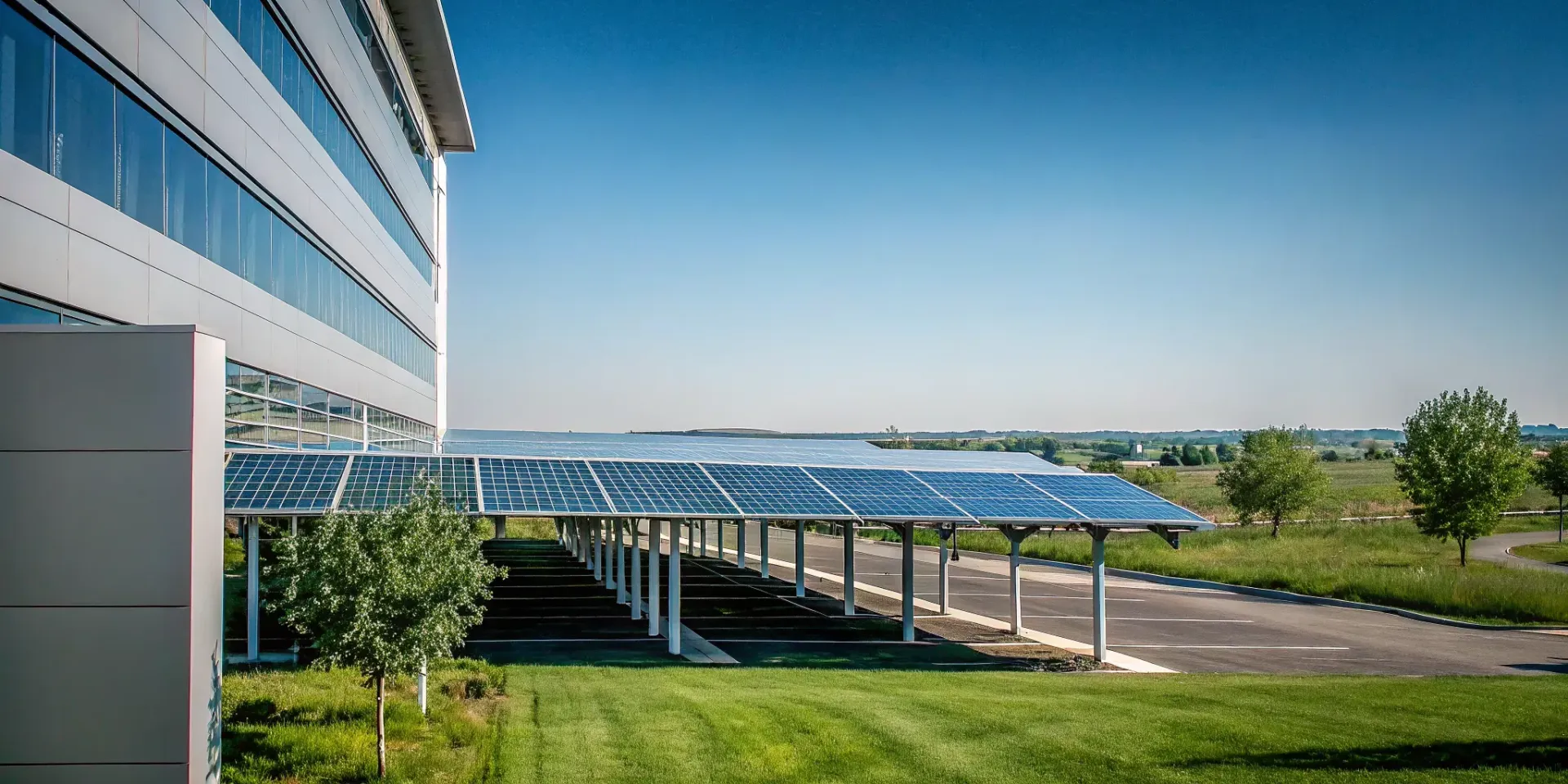
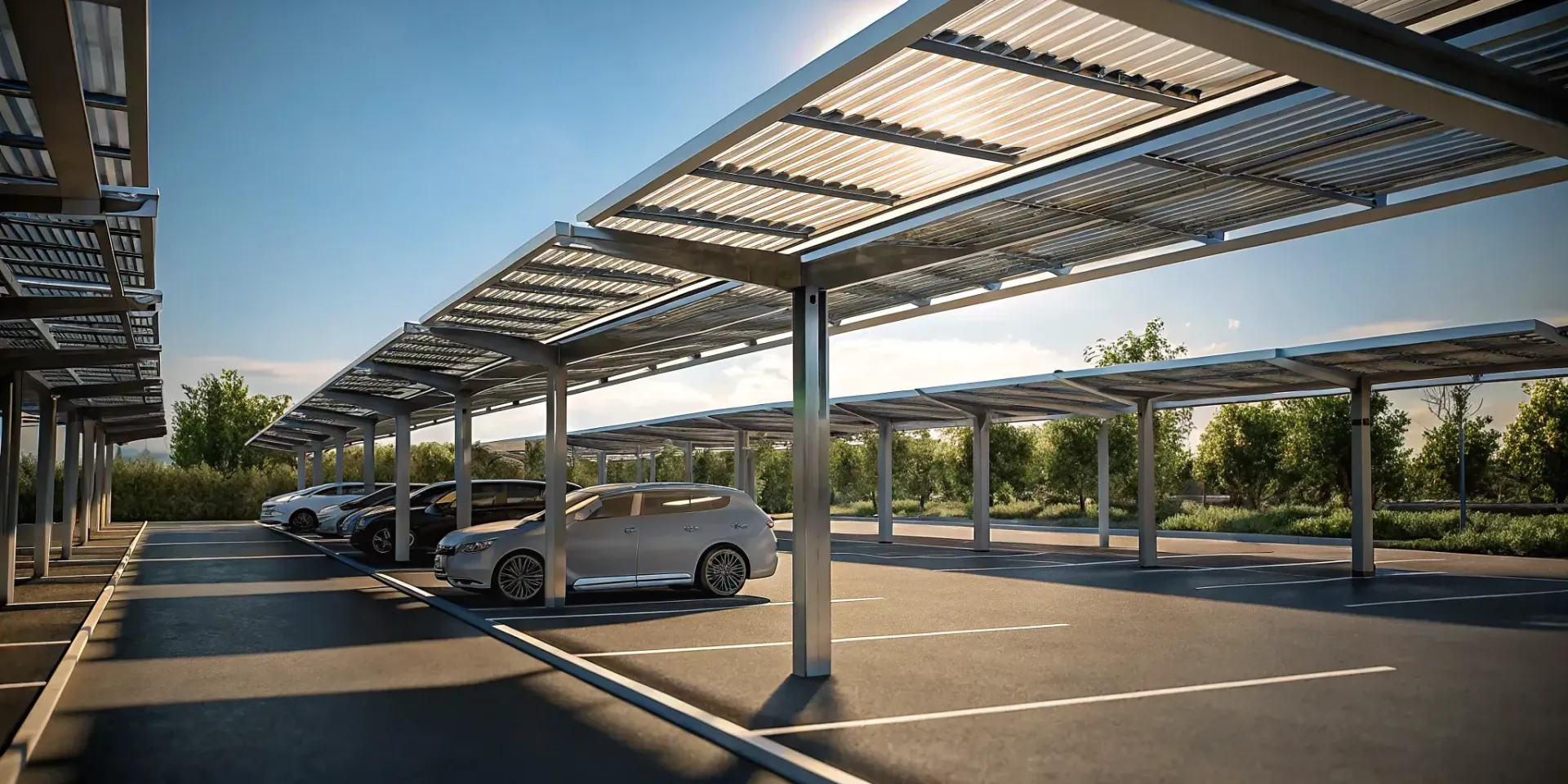
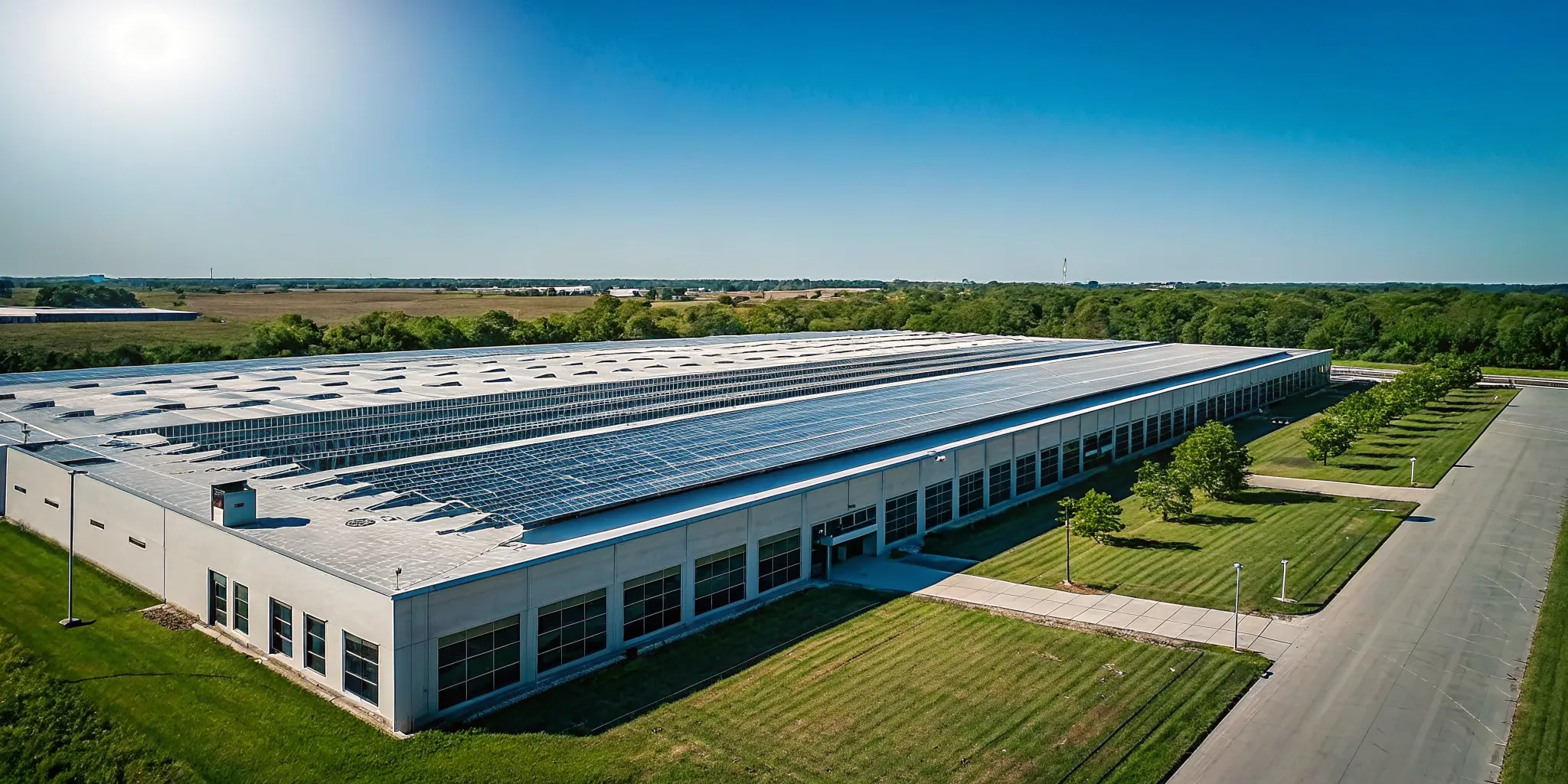
Most data centers use a blended approach. On-site rooftop arrays and solar carports typically cover 5 to 15% of the total load, reducing grid fees and demand charges at the facility meter. The remaining clean energy needs are met through off-site solar farms via power purchase agreements or virtual net metering. Barkley Solar provides feasibility modeling to determine the optimal mix for each facility's physical footprint and load profile. Visit our commercial solar installation page for more on system design and deployment timelines.
Can Solar Plus Battery Backup Deliver 24/7 Reliability?
For data centers, every minute of downtime carries real financial consequences. Combining data center solar panels with battery storage creates a power architecture that maintains uptime during grid in
terruptions while reducing reliance on diesel generators. The approach is straightforward: solar panels charge batteries during daylight hours, and the stored energy discharges at night or during peak demand periods.
How Battery Storage Protects Operations
Battery systems act as a buffer between intermittent solar generation and the constant power draw of servers and cooling equipment. During peak sun hours, solar production exceeds facility demand, and the surplus charges the battery bank. As the sun sets or cloud cover reduces output, the batteries discharge to maintain consistent power delivery. This configuration also reduces peak demand charges by drawing from stored energy during the high-cost hours when grid electricity is most expensive.
Barkley Solar integrates American-made battery storage equipment designed for commercial and industrial applications. Our team manages the full engineering and interconnection process so your facility maintains seamless power delivery. Read our solar battery backup guide for a detailed breakdown of how storage systems integrate with existing data center power infrastructure.
Tax Benefits That Improve the ROI
The same federal incentives that apply to solar panels also cover battery storage equipment. The 30% ITC applies to the full system cost including batteries, and MACRS accelerated depreciation applies to the storage component as well. Kansas net metering policies allow facilities to bank excess daytime generation as credits against nighttime consumption, improving the overall economics. Combined with the state's 100% property tax exemption on solar equipment, the total incentive stack significantly reduces the net cost of a solar-plus-storage installation.
Financial Case: Incentives and Payback for Kansas Data Centers
The financial math for data center solar panels in Kansas has reached a clear tipping point. Facilities running exclusively on grid power remain exposed to annual rate increases and unpredictable demand charges. On-site solar fixes a meaningful portion of energy costs for the next two decades while reducing tax liability through federal and state programs.
Incentive Stacking in Practice
The combined effect of available incentives creates compelling economics for Kansas data centers. The table below summarizes the primary programs and their financial impact on a typical commercial installation.
Payback Timelines
A well-designed commercial solar project in Kansas typically achieves full payback within five to eight years. After that point, the facility enjoys effectively free electricity from the system for the remaining warranty period of 25 years. For a facility consuming 5,000 kW continuously, those post-payback savings can exceed several million dollars over the system's lifetime. Barkley Solar provides custom ROI models based on your facility's load profile, available land, and current Evergy rate schedule. Visit our commercial solar cost guide to understand the investment range for your facility type.
Environmental and ESG Benefits for Kansas Tech Facilities
Beyond direct financial returns, on-site solar generation signals to investors, regulators, and corporate clients that a data center takes its environmental footprint seriously. For Kansas facilities competing for national and regional colocation contracts, documented renewable energy usage has become a baseline qualification rather than a differentiator.
- Scope 2 emissions reduction: On-site solar directly displaces gr
id-supplied electricity, lowering the purchased electricity emissions that make up the largest portion of a data center's carbon footprint.
Kansas facilities are well positioned to meet these requirements given the state's 5.4 peak sun hours daily, which makes on-site solar one of the most cost-effective tools for improving carbon accounting while simultaneously reducing operating costs.
How Barkley Solar Helps Kansas Data Centers Go Solar
Barkley Solar brings decades of combined experience to commercial solar projects across Kansas. Our team manages every phase from initial feasibility assessment through final system commissioning, providing a single point of accountability for data centers that cannot afford disruptions or delays.
Led by Experienced Commercial Professionals
Dan Rea, Vice President of Commercial Sales at Barkley Solar, brings over 21 years of solar industry expertise to every commercial engagement. Dan and his team guide facility owners through the full financial picture, from federal ITC and MACRS depreciation to Evergy net metering and Kansas property tax exemptions. This deep knowledge of incentive stacking ensures data center operators maximize every available program.
Turnkey Project Delivery
Barkley Solar provides comprehensive commercial services within a 50-mile radius of Wichita. The process begins with a no-obligation energy assessment that evaluates your facility's consumption patterns, available installation space, and financial opportunity. From there, the team handles engineering design, permitting, equipment procurement, professional installation, utility interconnection, and ongoing system support. Barkley Solar uses American-made Qcells high-efficiency panels backed by a 25-year manufacturer warranty guaranteeing at least 80% of initial power output. For additional detail on our process, explore our commercial solar maintenance services and battery storage options pages.
Local Expertise for Kansas Facilities
As a locally owned company headquartered in Wichita, Barkley Solar understands Kansas utility regulations, weather patterns, and building codes in a way that national installers cannot match. Our team works with Evergy interconnection requirements regularly and knows the specific permitting processes across Wichita and surrounding communities where many tech and industrial facilities operate.
Frequently Asked Questions
How long does it take to install solar panels for a data center?
Commercial solar installations for data centers typically require 18 to 24 months from initial site assessment to grid interconnection. This timeline is significantly faster than constructing new natural gas generation, which often takes five years or more. The shorter deployment window allows data centers to bring new power capacity online in alignment with facility expansion schedules.
Can solar batteries replace diesel backup generators?
Solar batteries reduce runtime for backup generators but rarely replace them entirely in data center applications. Large battery banks handle short-duration outages and peak load shaving effectively, while generators remain for extended grid failures. Approximately 36% of technology firms currently use battery storage alongside solar to manage power needs, according to industry surveys. A layered approach combining solar, batteries, and grid power is the most common architecture for 24/7 reliability.
Does Kansas tax the property value increase from solar panels?
No. Kansas provid
es a 100% property tax exemption on the assessed value added by a solar energy system. This applies to both rooftop and ground-mount installations, removing a cost that would otherwise increase annual facility expenses. The exemption makes the financial case for solar cleaner by eliminating a recurring tax liability that some other states impose.
What happens to solar production on cloudy days in Kansas?
Solar panels continue generating electricity on overcast days, though at reduced output levels typically between 10 and 25% of clear-sky capacity. Kansas averages 5.4 peak sun hours daily, which provides strong annual production even when accounting for seasonal weather variation. Battery storage captures surplus generation from sunny periods and makes it available during low-production days, ensuring consistent facility power delivery.
How many solar panels does a data center need?
The number varies significantly by facility size and energy demand profile. A large 100 MW facility would require approximately 1,446 acres of solar panels operating at a 24.7% capacity factor to meet its full load. Smaller colocation sites of 500 kW may need 7 to 8 acres. Barkley Solar provides precise sizing estimates based on your specific facility load profile, available land area, and budget parameters.
Ready To Schedule Your Commercial Solar Feasibility Assessment?
Rising power costs for Kansas data centers are not a future concern, they are a current operating reality. Every month without on-site solar generation is another month of full exposure to Evergy rate increases and peak demand charges. Commercial solar installations take 18 to 24 months from design to completion, meaning the best time to start the process is now rather than waiting for rates to climb further.
Call (316) 223-6111 to speak with a commercial solar expert who understands data center energy requirements. You can also visit Barkley Solar's commercial solar page to request a free feasibility assessment tailored to your facility's specific load profile, available space, and financial objectives.