How Much Do Commercial Solar Panels Cost? A Price Breakdown
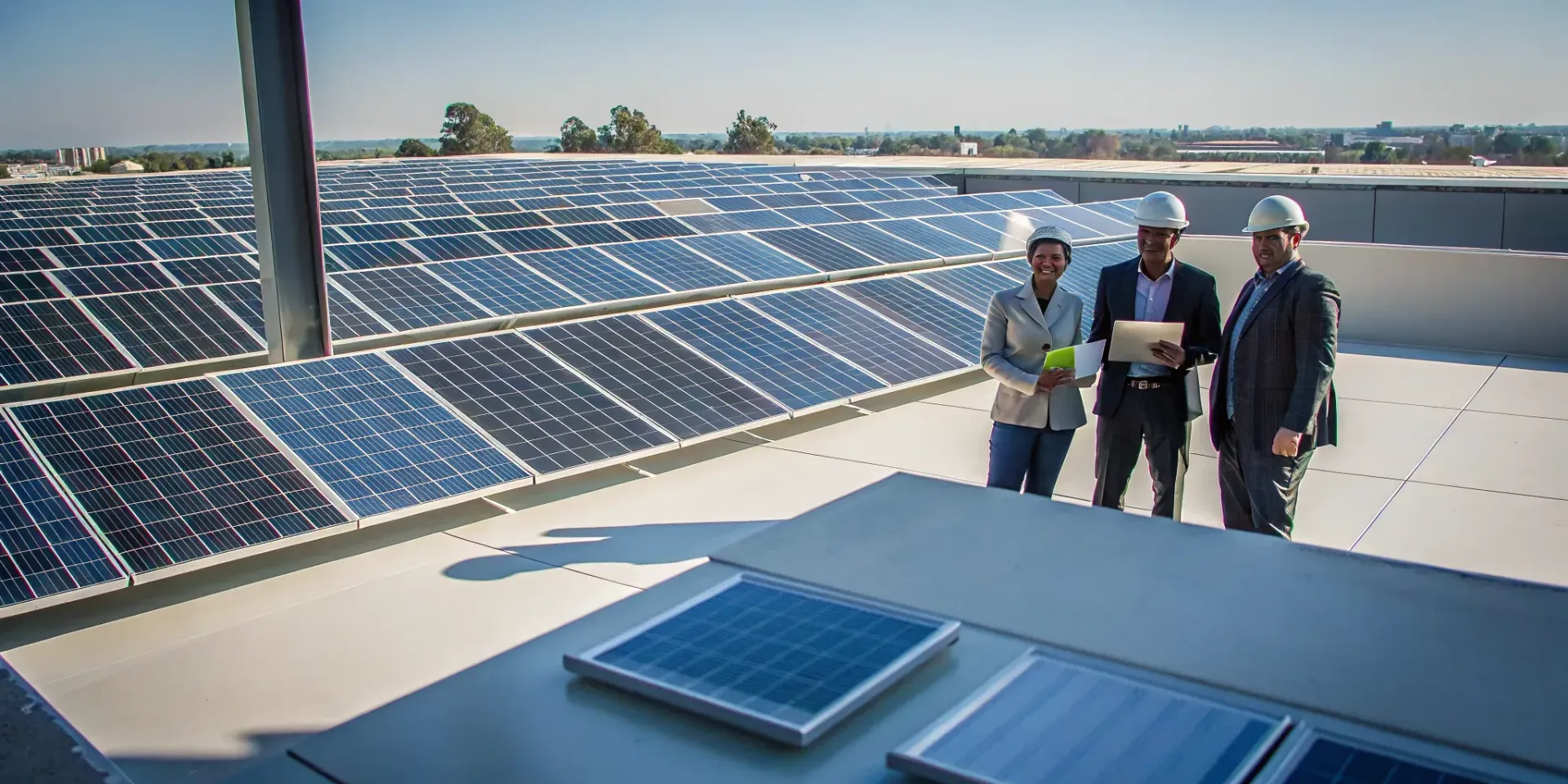
Let's be honest: the idea of a major capital project can be intimidating, and many business owners assume solar is simply too expensive. This is one of the biggest myths holding companies back from achieving energy independence. While a commercial solar system is a significant investment, it's far more accessible than you might think. The key is understanding the complete financial picture. So, how much do commercial solar panels cost after you factor in tax credits, depreciation, and energy savings? We’ll demystify the numbers, explore flexible financing options, and show you how the upfront cost is only a small part of the story.
Key Takeaways
- Size Determines Your Savings: While a larger solar system has a higher total cost, the price you pay per watt drops significantly on bigger projects, making commercial solar a more efficient investment than residential.
- Cut Your Costs with Credits and Deductions: Don't get stuck on the sticker price; the 30% federal tax credit acts as a direct discount, while accelerated depreciation provides a massive first-year tax deduction, drastically lowering your net investment.
- Make Solar Affordable with Smart Financing: You don't need a large cash reserve to go solar, as options like loans or leases allow you to start saving on energy bills immediately, often with little to no upfront payment.
Why Should Your Business Go Solar?
Switching to solar is more than just an environmental choice. For savvy business owners, it’s a financial strategy that cuts operating costs, provides stability against rising energy prices, and adds long-term value to your company. With electricity rates climbing, commercial solar is proving to be one of the smartest investments a business can make. It allows you to take control of your energy expenses and reinvest those savings back into what matters most: growing your business.
What Is a Commercial Solar System?
A commercial solar system is a power-generating setup designed specifically for your business’s property and energy needs. It uses solar panels, typically installed on your roof or grounds, to capture sunlight and convert it into free electricity for decades. This clean energy powers your daily operations, from running computers and machinery to keeping the lights on. A well-designed system significantly reduces your dependence on the utility grid, slashes your electricity bills, and can deliver major tax savings, making it a powerful asset for any company.
The Top Benefits for Businesses
One of the most compelling reasons businesses make the switch is the impressive return on investment. Many find that their commercial solar solutions pay for themselves through a combination of monthly energy savings, tax incentives, and renewable energy credits. With a typical payback period of just five to seven years, you can quickly turn a monthly expense into a revenue-generating asset. This isn't just about saving money; it's about creating a more resilient and profitable business model for the future.
Beyond the immediate payback, a solar installation increases your property's market value, making it a tangible investment in your physical assets. It also provides a crucial hedge against volatile and consistently rising utility rates, giving you predictable, stable energy costs for decades. Federal tax incentives play a huge role in making this possible, significantly lowering the initial investment for property owners. By taking advantage of these financing options and credits, you can make a sound decision that also showcases your company's commitment to sustainability, a value that resonates with modern customers.
Breaking Down Commercial Solar Costs by System Size
One of the first questions business owners ask is, "What's the bottom line?" When it comes to solar, the answer depends heavily on the size of the system you need. Think of it like buying in bulk: the larger the solar array, the lower your cost per watt will be. This is because of economies of scale, where the costs for equipment, design, and labor become more efficient as the project grows. Understanding this principle is key to seeing how a solar investment scales with your business's energy demands and financial goals.
To give you a clearer picture, we can group commercial solar projects into three general categories based on their size, which is measured in kilowatts (kW). A kilowatt is a unit of power, and the number of kilowatts you need is determined by your facility's electricity consumption. A small retail store will have very different needs than a large manufacturing plant. Below, we'll walk through the typical cost ranges for small, mid-sized, and large-scale commercial systems to help you find where your business might fit. Keep in mind these are industry averages, and a custom quote will give you the most accurate price.
Small Business Systems (25-100 kW)
If you run a small business like a local retail shop, a restaurant, or a small office, you'll likely fall into this category. A 25 to 100 kW system is a fantastic starting point for offsetting a significant portion of your electricity bill. Based on current industry data, you can expect the cost for a system this size to be between $1.80 and $2.55 per watt.
This translates to a total estimated investment of $45,000 to $255,000. This price typically includes all the necessary components: the solar panels, inverters, mounting hardware, and professional installation. For many small businesses, this investment marks a major step toward reducing overhead and establishing a commitment to sustainability in the community.
Mid-Sized Business Systems (100-500 kW)
For businesses with higher energy needs, such as medium-sized manufacturing facilities, agricultural operations, or larger office buildings, a system between 100 and 500 kW is more appropriate. At this level, you start to see more significant economies of scale. The average cost per watt for a mid-sized system typically drops to between $1.40 and $1.90.
This puts the total project cost in the range of $140,000 to $950,000. An investment of this size can drastically reduce or even eliminate your monthly electricity bills, leading to substantial long-term savings and greater energy independence. Our team has extensive experience designing and installing systems of this scale, ensuring your project is built for maximum efficiency and durability. You can learn more about our commitment to quality craftsmanship.
Large-Scale Commercial Systems (500 kW - 2 MW)
Large-scale systems are designed for major energy consumers like large warehouses, data centers, and industrial manufacturing plants. These projects, which can range from 500 kW to over 2 megawatts (MW), offer the best value on a per-watt basis. The cost for these systems generally falls between $1.10 and $1.50 per watt, thanks to the significant economies of scale involved in both equipment purchasing and installation logistics.
The total investment for a large-scale system can range from $550,000 to over $3 million. While this is a major capital expenditure, the return on investment is often faster due to the immense energy savings. For projects of this magnitude, exploring different financing options can make the upfront cost more manageable and help your business start saving from day one.
What Factors Drive Your Final Solar Cost?
Figuring out the price of a commercial solar system is a bit like pricing a custom-built car. The final number depends on the specific parts you choose and how they all fit together. There isn't a single sticker price because every business has unique energy needs, a different property, and specific goals. The total investment is shaped by a few key variables that determine the system's performance, complexity, and long-term value. Understanding these factors will help you see where your money is going and why a custom quote is so important for getting an accurate picture of your costs.
Your System's Size and Power Needs
The most significant factor influencing your total cost is the size of the solar system, which is directly tied to your facility's energy consumption. The more electricity your business uses, the larger the system you'll need to offset those costs. We determine the right size by analyzing your past utility bills and your goals for energy independence. While a bigger system has a higher overall price tag, the cost per watt (the standard unit for measuring solar power) typically decreases as the system gets larger. This means you benefit from economies of scale, making larger commercial solar solutions a more cost-effective investment per unit of energy produced.
The Quality and Type of Solar Panels
Not all solar panels are created equal. The equipment you choose plays a major role in both the upfront cost and the long-term performance of your system. Higher-efficiency panels, for example, cost more initially but generate more power in a smaller amount of space. This can be a huge advantage if your roof area is limited. The quality of the panels also matters. Top-tier panels often come with better warranties, greater durability, and a slower rate of degradation, ensuring your system produces reliable power for decades. Our team helps you find the right balance between upfront cost and long-term value to match your budget and performance goals.
Your Roof and Installation Details
The specifics of your property are another key piece of the cost puzzle. The age, material, slope, and condition of your roof all affect the installation process. A complex roof design or one that needs repairs before panels can be installed will add to the project's cost. Alternatively, if a roof installation isn't feasible, a ground-mounted system might be a better fit, though it comes with its own set of site preparation and construction costs. Our expert team handles every detail, from the initial structural assessment to the final installation, ensuring the process is smooth and your building is protected.
Your Location and Local Regulations
Where your business is located matters. Local building codes, zoning laws, and utility interconnection requirements vary from one Kansas county to the next, and these rules can influence the project's design, timeline, and cost. Securing the right permits and approvals is a critical step that requires local expertise. On the bright side, your location also determines which financial incentives you can access. While federal credits are available everywhere, many states and local utility companies offer their own rebates and programs that can significantly reduce your net cost. We stay on top of these regulations and available financing options and incentives to make sure you capture every possible saving.
What Other Costs Should You Plan For?
When budgeting for a commercial solar project, the price of the panels and installation is just the beginning. To get a complete financial picture, it’s smart to account for a few other expenses that come with owning a solar energy system. Thinking about these costs upfront helps you avoid surprises and ensures your investment is sound from day one. These additional costs cover everything from getting the proper approvals to keeping your system running at peak performance for years to come.
Permitting and Grid Connection Fees
Before a single panel can be installed, your project needs approval from local authorities and your utility company. This involves securing permits and paying grid connection fees, which cover the necessary engineering reviews and inspections. These fees can vary depending on your municipality but often account for 10% to 15% of your total project cost. An experienced local installer is a huge advantage here, as they will handle the entire permitting process for your commercial solar project.
Ongoing Maintenance and Cleaning
Your solar panel system needs regular care to perform its best. Professional cleaning is important, as dust and debris can reduce efficiency by up to 20%. It’s also wise to schedule an annual inspection to catch any potential issues early. The most significant maintenance cost to plan for is replacing the inverter, the component that converts solar energy into usable electricity, every 10 to 15 years. We also offer solar panel removal and reinstallation services for any future roof repairs or replacements.
Insurance and Warranty Coverage
Protecting your solar investment is key, and that’s where insurance and warranties come in. You’ll want to talk to your business insurance provider to make sure your new solar array is covered under your existing policy. Most solar components also come with robust manufacturer warranties, like a 25-year performance warranty for panels. A reputable installer will also provide a workmanship warranty to cover the installation itself. Understanding these protections gives you peace of mind. As a company, we stand by our work, and you can learn more about us and our commitment to quality.
How Can You Lower Your Upfront Solar Costs?
The initial price tag for a commercial solar system is often the biggest hurdle for business owners. But thinking of it as a one-time expense is a mistake. A solar installation is an investment, and like any smart investment, there are strategies to make it more financially accessible. Thankfully, a powerful combination of federal, state, and local incentives exists specifically to reduce the upfront financial commitment and accelerate your return on investment. These programs are designed to make switching to clean energy a sound business decision, not just an environmental one.
By taking advantage of tax credits, depreciation, and local rebates, you can significantly cut the net cost of your project. These aren't complicated loopholes; they are straightforward programs available to businesses ready to invest in their energy future. When you combine these savings with flexible financing options, the path to energy independence becomes much clearer and more affordable than you might think. Let’s walk through the key incentives that can make a commercial solar project fit your budget.
The Federal Investment Tax Credit (ITC)
The most significant financial incentive available is the federal Investment Tax Credit, or ITC. Think of it as a direct discount on your solar project, paid for by the federal government. The ITC allows you to claim a credit on your federal taxes equal to 30% of the total cost of your solar panel system installation. This isn't just a deduction; it's a dollar-for-dollar credit that directly reduces the amount of tax you owe. For certain projects, such as those using domestically sourced materials or located in specific energy communities, you may even qualify for an additional 10% credit. This powerful incentive alone can slash nearly a third off the price of going solar.
Accelerated Depreciation (MACRS)
For businesses, the financial benefits continue with accelerated depreciation. The Modified Accelerated Cost Recovery System (MACRS) is a tax mechanism that lets you write off the value of your solar equipment on a fast-tracked schedule. Under current rules, your business can deduct a staggering 85% of the system's value in the very first year of operation. This massive deduction can substantially lower your taxable income for the year, providing a significant boost to your cash flow right after the installation is complete. It’s a key advantage that makes the financial impact of a commercial solar investment much easier to manage from day one.
State and Local Rebates
The savings don't stop at the federal level. Many states and local municipalities offer their own incentives to encourage businesses to adopt solar energy. While these programs vary by location, they can provide another layer of significant savings. For example, some areas offer property tax exemptions, ensuring that your property taxes won't increase even though your new solar array has added value to your building. Other incentives might include sales tax exemptions on the purchase of your equipment or even direct cash rebates after the system is installed. As local experts, we stay on top of these programs to ensure our clients capture every available saving.
Utility Company Programs
Your local utility provider can also be a partner in making your solar investment pay off. The most common program is net metering, which is a billing arrangement that credits you for any excess electricity your solar panels generate and send back to the power grid. On sunny days when your system produces more power than your business uses, your electric meter essentially runs backward. This generates credits that you can use to offset your electricity costs during times when your panels aren't producing, like at night or on cloudy days. In some cases, you can even zero out your monthly electricity bill or get paid for the surplus energy you contribute.
How to Finance Your Commercial Solar Project
The initial investment for a commercial solar system is a significant consideration, but it shouldn't be a barrier. The good news is you have several flexible ways to pay for your project, each with its own set of benefits. The right path for your business depends entirely on your financial goals, cash flow, and whether you prefer to own the system yourself.
Think of it like acquiring any other major asset for your company. You can buy it outright, finance it over time, or enter an agreement where you just pay for its output. Exploring these financing options is a key step in making solar work for your budget. We can walk you through each one to find the perfect fit for your business, ensuring you get the maximum return from your solar investment.
Paying with Cash
If your business has the capital, paying for your solar system upfront is the most direct route to ownership. This approach allows you to maximize your long-term savings by completely avoiding interest payments and financing fees. When you purchase the system outright, you also get to take full advantage of every available financial incentive.
This means you are the direct recipient of the federal solar tax credit, accelerated depreciation benefits, and any state or local rebates. These incentives can significantly reduce your net cost and shorten your payback period. A cash purchase is an excellent choice for established businesses ready to make a long-term investment in their energy future and own their power-producing asset from day one.
Using a Solar Loan
A solar loan lets you finance your system while retaining full ownership from the moment it’s installed. This is a popular choice for businesses that want the financial perks of ownership without dedicating a large amount of capital upfront. With a loan, you can still claim all the valuable tax credits and depreciation benefits for yourself, just as you would with a cash purchase.
Many businesses find that their monthly loan payment is less than what they were previously paying for electricity, creating immediate positive cash flow. This option lets you start saving on energy costs right away while you build equity in a valuable asset. It’s a smart strategy for any company looking to balance upfront costs with the long-term financial advantages of owning a commercial solar system.
Signing a Power Purchase Agreement (PPA)
A Power Purchase Agreement, or PPA, is a great way to get the benefits of solar energy with little to no upfront cost. Under a PPA, a solar developer like Barkley Solar installs, owns, and maintains the solar panel system on your property. Your business simply agrees to purchase the electricity the system generates at a fixed, predictable rate.
This rate is typically lower than what you currently pay your utility company, so you start saving money immediately. Since you don't own the equipment, the developer is responsible for all maintenance and repairs. The trade-off is that the developer receives the tax credits, not your business. A PPA is ideal for organizations that want to lower their energy bills without the financial commitment or responsibilities of system ownership.
Leasing Your Solar System
A solar lease is another excellent third-party ownership model that requires no upfront investment. It’s similar to a PPA, but instead of paying for the power you use, you pay a fixed monthly fee to lease the solar equipment. This gives you a predictable, consistent expense that is often lower than your average utility bill, making it easy to budget for your energy costs.
Just like with a PPA, the solar developer owns the system and handles all the ongoing maintenance, repairs, and insurance. This makes it a completely hands-off solution for your business. Because you don't own the system, you won't be able to claim the tax incentives. A lease is a fantastic option for businesses that prioritize a simple, fixed monthly payment and want to enjoy clean energy savings without any hassle.
When Will Your Solar System Pay for Itself?
A solar system is a major investment for your business, so one of the first questions you probably have is, "When will it pay for itself?" This is what we call the solar payback period, and it’s the time it takes for your energy savings to cover the initial cost of your system. The great news is that after this period, the electricity your panels generate is essentially free profit for your business. While the exact timeline varies, understanding how to calculate your return on investment (ROI) and what factors influence it will give you a clear picture of the long-term financial benefits of your commercial solar project. Most businesses find the investment pays off much sooner than they expect, setting them up for decades of energy savings.
How to Calculate Your Return on Investment (ROI)
Thinking about your return on investment, or ROI, doesn't have to be complicated. There's a straightforward formula you can use to estimate your solar payback period. You just need to calculate it like this: take your total installed cost, subtract any financial incentives you receive, and then divide that number by your annual electricity savings. The result is the number of years it will take for your system to pay for itself. Our team can walk you through the various financing options and incentives available to make sure you get the most accurate picture of your investment and potential savings.
What Affects Your Payback Timeline
So, what does a typical payback timeline look like? For most businesses, a solar system pays for itself within six to ten years. Considering that solar panels are built to last 25 years or more, that leaves you with over a decade of free electricity. Several key factors influence this timeline, including your system's final cost, how much electricity your business uses, and the rates your utility company charges. However, one of the biggest factors is the available financial incentives. For instance, the federal solar tax credit allows you to recover 30% of the installation cost, which can dramatically shorten your payback period and make your switch to solar even more profitable.
Commercial vs. Residential Solar: What's the Cost Difference?
You might think that since commercial and residential solar systems both use panels to generate electricity, their costs would be similar. However, the pricing structures are quite different. While a larger commercial project will naturally have a higher total price tag, the cost per watt is often significantly lower than what you'd find for a home installation. This difference comes down to a few key factors, primarily the scale of the project and the efficiencies that come with it. Let's break down what that means for your bottom line.
Comparing Price Per Watt
When you're looking at solar quotes, you'll see the term "price per watt" used a lot. It's the standard way to measure the cost of a solar energy system, making it easier to compare apples to apples. For commercial solar installations, the average cost typically falls between $1.40 and $1.80 per watt. The final price depends on the complexity of the project. For example, a smaller commercial system might cost around $1.83 per watt, while massive industrial-sized systems can see that price drop to nearly $1.00 per watt. This is a major financial advantage for larger installations and a key reason why going solar makes so much sense for businesses.
Understanding Economies of Scale
So, why is the per-watt cost lower for bigger projects? It all comes down to economies of scale. Think of it like buying in bulk at a warehouse store. The fixed costs of a solar project, like design, engineering, permitting, and mobilizing the installation crew, are similar whether we're installing 50 panels or 500. When those costs are spread across a much larger number of panels, the cost attributed to each individual watt of power goes down. This efficiency is the main reason a commercial solar project is more cost-effective per unit of energy than a smaller residential system. Of course, your final price will also depend on equipment quality and your specific business needs.
Common Myths About Commercial Solar Costs
When business owners think about solar energy, the conversation often turns to cost. It’s easy to get sticker shock or feel overwhelmed by what seems like a huge financial commitment. A lot of the hesitation comes from common misconceptions that have been circulating for years. Let's clear the air and look at the reality behind two of the biggest myths about commercial solar costs, so you can make a decision based on facts, not fear.
Myth #1: The Upfront Investment Is Unaffordable
One of the most persistent myths is that going solar requires a massive, unattainable upfront investment. While this might have been true years ago, the cost of solar technology has dropped dramatically over the past decade, making it a much more cost-effective energy source for businesses. Today, many companies find that their solar panel systems pay for themselves through significant monthly savings on electricity bills. When you add federal tax incentives, accelerated depreciation, and local rebates to the equation, the initial financial outlay becomes even more manageable. Plus, flexible financing options mean you don’t have to pay for everything at once.
Myth #2: Maintenance and Repairs Are Too Expensive
Another common worry for business owners is that maintaining a solar energy system will be complicated and expensive. The truth is, modern solar panels are built to be incredibly durable and require very little maintenance. They have no moving parts and are designed to withstand decades of exposure to rain, wind, and snow. For the most part, routine upkeep involves simple cleanings to remove any dirt or debris that could block sunlight. Reputable installers also provide strong warranties that cover the equipment. If you ever need service, like having to remove panels for a roof repair, an experienced team can handle the process smoothly, giving you long-term peace of mind.
How to Choose the Right Commercial Solar Installer
Choosing an installer is one of the most important decisions you'll make in your solar journey. The right partner will not only handle the technical details of your installation but will also be there to support you for decades to come. A lower price tag from an inexperienced installer can lead to costly problems down the road, from performance issues to safety hazards. You’re looking for a team with a solid reputation, proven expertise, and a commitment to quality craftsmanship.
Think of it as hiring a long-term partner for your business’s energy future. You want a company that is transparent, reliable, and easy to work with. Before you sign any contracts, take the time to vet potential installers thoroughly. A great solar company will be happy to answer your questions and provide the documentation you need to feel confident in your choice. By focusing on a few key areas, you can find a trusted partner to bring your commercial solar project to life.
Check Their Licensing and Certifications
First things first, make sure any installer you consider is properly licensed and certified. This isn't just about checking a box; it's a fundamental measure of their professionalism and competence. Proper licensing ensures the company meets all state and local regulations for electrical and construction work, which is crucial for a safe and compliant installation. Certifications, like those from the North American Board of Certified Energy Practitioners (NABCEP), show that the technicians have received specialized training and have demonstrated their expertise in the solar industry. Don't hesitate to ask for proof of their credentials. A reputable installer will have this information readily available.
Verify Their Commercial Project Experience
Installing solar on a business is very different from a residential project. Commercial systems are larger, more complex, and involve unique structural and electrical considerations. That’s why finding a solar installer with a proven track record in commercial projects is essential. An experienced team will understand the specific challenges of commercial installations, from working around business hours to navigating complex permitting. Ask to see a portfolio of their past projects. This will give you a clear idea of their capabilities and help you feel confident that your project will be completed efficiently and to the highest standard.
Review Their Warranties and Service Plans
Your solar panels are a long-term investment, and strong warranties are your safety net. A reputable installer should offer comprehensive warranties that cover both the equipment and their own work. Look for two main types: a performance warranty, which guarantees your panels will produce a certain amount of power over time (usually 25 years), and a workmanship warranty, which covers any issues related to the installation itself. It’s also wise to ask about their service plans for ongoing support. For example, find out what happens if you need roof repairs and require a solar panel removal and reset. These details protect your investment for years to come.
Related Articles
- Commercial Solar Company in Wichita, KS | Barkley Solar
- KS Solar Power FAQs | Barkley Solar
- Commercial Solar Installation in Wichita, KS | Barkley
- Commercial Solar Maintenance in Wichita, KS | Barkley
- Residential Solar Company in Newton, KS | Barkley Solar
Frequently Asked Questions
How do I figure out the right system size for my business? The best way to determine the right size is to start with your energy history. We typically analyze your last 12 months of utility bills to get a clear picture of your electricity consumption throughout the year. From there, we'll talk about your goals. Are you looking to offset a portion of your bill or eliminate it completely? We also consider your future plans, like whether you might add electric vehicle chargers or new equipment, to design a system that meets your needs today and supports your growth tomorrow.
What happens if I need to replace my roof after the panels are installed? This is a great question and a very common situation. If your roof needs repairs or a full replacement down the line, a professional solar team can handle the process smoothly. We offer a service to carefully detach the panels and mounting hardware, store them safely while the roof work is completed, and then reinstall the entire system once your new roof is ready. It’s a straightforward process when you work with an experienced installer.
How long does the entire process take, from consultation to the system being turned on? The timeline can vary depending on the project's size and complexity, but a typical commercial installation follows a few key phases. After our initial consultation and design, we move into permitting with your local city or county and the utility company. This step can sometimes take the longest. Once we have all the approvals, the physical installation is often completed relatively quickly. All in all, you can generally expect the process to take a few months from start to finish.
Are the tax credits and other financial incentives guaranteed? While powerful incentives like the federal tax credit are established by law, your ability to claim them depends on your business's specific tax liability. We guide all our clients through the available incentives and help you understand what you are likely eligible for based on your project. However, we always recommend that you consult with your tax professional to confirm how these credits and depreciation benefits will apply to your company's unique financial situation.
With a PPA or lease, what happens at the end of the contract term? At the end of a Power Purchase Agreement (PPA) or lease term, which is often around 20 to 25 years, you typically have a few options. You can choose to renew the agreement and continue saving on your energy costs, have the solar developer remove the system from your property at no cost, or you can purchase the system outright at its fair market value. This flexibility ensures you are not locked into a decision that no longer fits your business needs decades from now.