The Business Guide to Commercial Solar Panels
Your company’s roof is more than just a structure that keeps the rain out; it’s an underutilized asset with huge financial potential. By installing commercial solar panels, you can transform that empty space into a power-generating workhorse for your business. This isn't just an operational expense; it's a capital improvement that pays for itself through energy savings and can directly increase your property value. This article reframes the conversation around solar, showing you how to view it as a long-term strategic investment that strengthens your brand, lowers your operating costs, and delivers a clear return for decades to come.
Key Takeaways
- Treat solar as a strategic investment, not just an expense : A commercial system pays for itself through energy savings, often in just 4 to 7 years, especially when you factor in the 30% federal tax credit that directly reduces your project cost.
- Gain control over more than just your energy bill: Going solar gives you predictable operating costs, increases your property's market value, and strengthens your brand by showing customers you're a forward-thinking business.
- Don't let the process or common myths hold you back: Modern panels are durable and low-maintenance, and a professional partner manages all the complex details for you, from custom design and permitting to the final installation.
What Are Commercial Solar Panels?
If you’ve seen solar panels on a local home, you already have a basic idea of what commercial solar panels are. Think of them as the heavy-duty version, built specifically for the higher energy demands of a business. Whether you run a small office, a large manufacturing plant, or a retail store, these systems are designed to generate a significant amount of power to keep your operations running smoothly and affordably.
Unlike a one-size-fits-all solution, a commercial solar installation is custom-designed for your property and energy needs. The goal is to offset as much of your utility bill as possible, giving you more control over your monthly operating costs. It’s a practical investment in your business’s financial future and a visible commitment to sustainability. For many Kansas businesses, making the switch is a strategic move that pays dividends for decades.
Commercial vs. Residential: What's the Difference?
While the core technology is the same, commercial and residential panels have a few key differences. Commercial panels are typically larger and more powerful. Because a warehouse or office building consumes far more energy than a typical home, the panels need a higher wattage to generate enough electricity. They are also built for durability and often come with longer warranties, usually around 25 to 30 years, to protect your long-term investment. The installation itself is also on a larger scale, involving more panels and a more robust mounting system to fit the unique structure of a commercial roof or property.
Which Businesses Benefit Most from Solar?
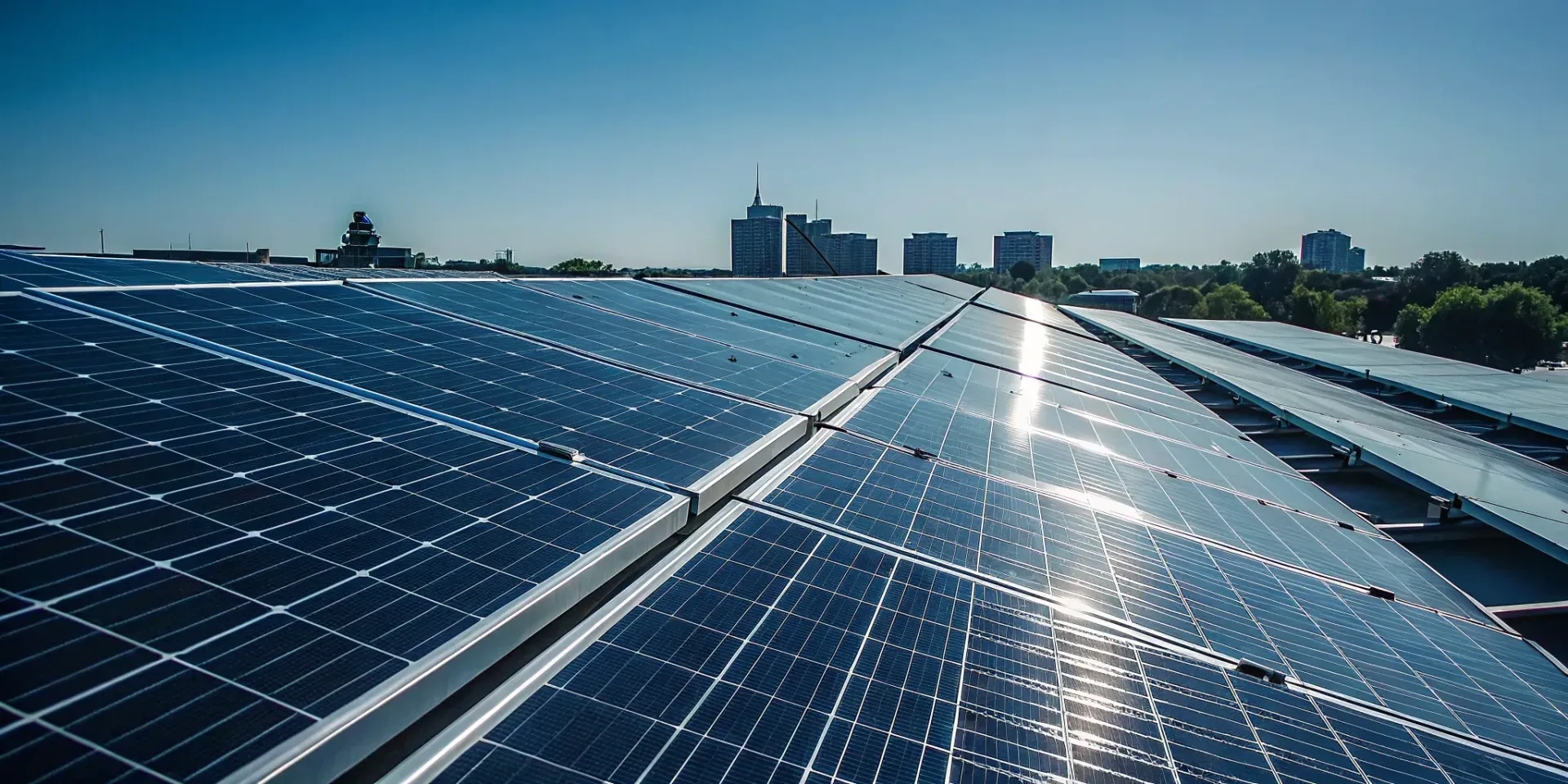
Any business with a utility bill can benefit from going solar, but some see an especially quick return. Businesses with large, flat roofs like warehouses, manufacturing facilities, and agricultural buildings are perfect candidates. Offices, schools, hotels, and retail stores with high daytime energy use also benefit tremendously, since solar panels produce the most power when you need it most. A solar installation can cover a huge portion of your energy needs, sometimes up to 90%, leading to substantial savings. Plus, installing panels can even help protect your roof from the elements, keeping it cooler in the summer and potentially extending its lifespan. It’s a smart way to turn an unused asset, your roof, into a source of revenue.
How to Choose the Right Commercial Solar Panels
When you start looking at solar panels, the technical jargon can feel a little overwhelming. But don't worry, you don't need an engineering degree to make a great choice for your business. Selecting the right panels really comes down to a few key factors: how efficiently they convert sunlight into power, the technology they use, and the warranty that backs them up.
Understanding these three elements will help you find the perfect fit for your property, budget, and energy goals. Let's break down what you need to know to choose with confidence.
Understanding Panel Efficiency and Wattage
Panel efficiency is simply a measure of how much sunlight a panel can turn into usable electricity. A higher efficiency rating means you get more power from a smaller area. Panels typically fall into a few categories: standard efficiency panels are great for large, open roofs where space isn't an issue. High-efficiency and premium panels are perfect for smaller rooftops or areas where you want to generate the maximum amount of power possible. The panel's wattage tells you its power output, so a higher wattage means more electricity for your business. An expert can help you find the right balance between efficiency and cost for your specific needs.
Monocrystalline vs. Polycrystalline Technology
You'll likely hear two terms when discussing panel technology: monocrystalline and polycrystalline. Monocrystalline panels, made from a single, pure silicon crystal, are the modern standard. They are more efficient and have a uniform black color that gives them a sleek, premium look. Polycrystalline panels, made from multiple silicon fragments melted together, are slightly less efficient and have a blue, speckled appearance. While they can be a budget-friendly choice, most modern commercial solar projects use monocrystalline technology because its superior performance and durability deliver a better long-term return. You might even see advanced versions like bifacial panels, which can capture sunlight from both sides.
What to Look for in a Warranty
A strong warranty is one of the best indicators of a high-quality solar panel. It’s the manufacturer’s promise that their product will perform reliably for decades to come. Most panels come with two warranties: a product warranty and a performance warranty. The product warranty covers any defects in materials or workmanship, typically for 10 to 25 years. The performance warranty is even more important, as it guarantees the panel will still produce a certain percentage of its original power after 25 or even 30 years. At Barkley Solar, we only partner with manufacturers who offer these robust, long-term warranties, so you can be sure your investment is protected.
Breaking Down the Cost of Commercial Solar
Thinking about the price tag of a commercial solar system can feel a little intimidating, but it’s helpful to see it as a long-term asset that pays for itself over time. The final cost isn't a random number; it’s based on a few key variables specific to your business. Understanding these factors will give you a clearer picture of what to expect and how quickly you’ll see a return. From the size of your system to the financial incentives you can claim, every piece of the puzzle contributes to your bottom line. Let's walk through what goes into the cost and how you can calculate the financial benefits for your company.
What Affects Your Total Installation Cost?
The total price of your solar installation isn't a one-size-fits-all figure. It’s tailored to your business’s specific needs. The biggest factor is the system's size, which we determine based on your current energy consumption. A larger operation that uses more electricity will naturally need more panels to offset its usage. The type and quality of the equipment you choose, like the solar panels and inverters, also play a role. Higher-efficiency panels might cost more upfront but can generate more power in less space. Finally, the unique characteristics of your property, such as your roof’s condition and accessibility, can influence the final installation cost. A professional assessment is the best way to get an accurate quote for a commercial solar system designed just for you.
Calculating Your Payback Period and ROI
Your payback period is the time it takes for your energy savings to completely cover the initial cost of your solar system. For many businesses, this happens within just 4 to 7 years. After that, every bit of energy your panels produce represents pure profit. Your return on investment (ROI) goes even further, measuring the total financial gain over the system's entire 25+ year lifespan. A huge factor in this calculation is the federal Investment Tax Credit (ITC), which allows businesses to deduct 30% of the system's cost from their federal taxes. This credit significantly reduces your net cost and shortens your payback period. When you combine this with other financing options and your monthly energy savings, the financial case for going solar becomes crystal clear.
The Business Case for Going Solar
Switching to solar is more than just an environmental choice; it’s a strategic business decision with a clear return on investment. For many Kansas businesses, the question isn’t if they should go solar, but when. From cutting daily expenses to building a stronger brand, the benefits of a commercial solar installation can reshape your company’s financial future and competitive standing. Let's look at the practical advantages you can expect when you make the switch.
Lower Your Operating Costs
One of the most compelling reasons to adopt solar is the immediate and long-term impact on your bottom line. Electricity is a significant and unpredictable operating expense for most companies. By generating your own power, you can reduce or even eliminate your utility bill, freeing up capital that can be reinvested into growth, innovation, or your team. A commercial solar system is designed to cover a substantial portion of your energy needs, giving you control over a cost that was once out of your hands. This move transforms a variable expense into a fixed, predictable asset.
Gain Energy Independence
Relying on the grid means you’re subject to rate hikes, peak demand charges, and service interruptions. A commercial solar installation gives your business a powerful layer of energy independence. While most systems remain connected to the grid for flexibility, you’ll be producing your own clean electricity during peak daylight hours. This reduces your dependence on the utility company and protects your business from volatile energy prices. Gaining this control over your power supply leads to more accurate financial forecasting and a more resilient business operation, no matter what happens with the local energy market.
Increase Your Property Value
A solar panel system is a significant upgrade that can directly increase the value of your commercial property. Think of it as a capital improvement that pays you back every month. Potential buyers or tenants will see the solar installation as a major asset, as it promises lower operating costs for them from day one. This makes your property more attractive and valuable on the market. Investing in solar isn't just about saving money on electricity; it's about enhancing the long-term worth of your physical assets. Exploring our financing options can show you how this investment fits into your financial strategy.
Strengthen Your Brand's Reputation
In today's market, customers and clients increasingly prefer to do business with companies that demonstrate a real commitment to sustainability. Installing solar panels is a visible and powerful statement about your brand’s values. It shows your community that you are invested in a cleaner future and are a forward-thinking leader in your industry. This positive reputation can attract new customers, improve employee morale, and set you apart from the competition. As a company dedicated to empowering our community, we at Barkley Solar have seen firsthand how a commitment to clean energy builds lasting trust.
How to Finance Your Commercial Solar Project
The initial investment for a solar installation is a significant consideration for any business, but the good news is you have options. The right financing path depends on your company’s cash flow, financial goals, and long-term strategy. Whether you want to maximize your return on investment by purchasing the system outright or prefer a solution with little to no upfront cost, there’s a way to make solar work for your budget.
Understanding these different avenues is the first step toward making a confident decision. We can help you explore the financial models that make the most sense for your business and guide you toward achieving your energy goals. Let's walk through the most common ways to finance a commercial solar project.
Paying Upfront with a Direct Purchase
If your business has the capital, paying for your solar panel system upfront is the most financially rewarding option in the long run. Think of it as a direct investment in your company’s infrastructure. By purchasing the system outright, you own it from day one. This means you get to keep 100% of the energy savings without any monthly loan or lease payments. You’ll also be able to directly claim valuable tax credits and incentives, which can significantly reduce the net cost of your project. This path offers the quickest payback period and the highest overall return on investment.
Securing a Solar Loan
For businesses that prefer to preserve their capital for other operational needs, a solar loan is an excellent choice. This approach allows you to finance the entire cost of the system, often with little to no money down. You still get all the benefits of ownership, including the energy savings and tax credits, while paying for the system over time with predictable monthly payments. When exploring this route, be sure to ask about interest rates, loan terms, and any potential fees. Our team can connect you with trusted lending partners and walk you through our flexible financing options to find a plan that fits your budget.
Exploring Solar Leases and PPAs
Solar leases and Power Purchase Agreements (PPAs) are great if your main goal is to lower your electricity bills without any upfront investment or ownership responsibilities. With a solar lease, you pay a fixed monthly rate to use the solar energy produced by a system that a third party owns and maintains on your property. A PPA is similar, but instead of a flat fee, you agree to purchase the solar power generated at a set price per kilowatt-hour, which is typically lower than the utility’s rate. Both options provide immediate savings on your energy costs, but it's important to remember that the third-party owner receives the tax credits.
Using Tax Credits and Incentives
Regardless of how you finance your project, tax incentives can make a huge difference in the overall cost. The most significant of these is the federal Investment Tax Credit (ITC), which allows businesses to deduct 30% of the cost of their solar installation directly from their federal taxes. This isn't just a deduction from your taxable income; it's a dollar-for-dollar credit that directly reduces your tax bill. The Department of Energy offers a helpful homeowner's guide to the federal tax credit for solar photovoltaics that can provide more details. Taking full advantage of these incentives is key to making your solar investment even more profitable.
Common Myths About Commercial Solar, Debunked
Thinking about solar for your business is a big step, and it's easy to get bogged down by conflicting information. You've probably heard a few things that give you pause, from worries about cost to questions about performance on cloudy Kansas days. Let's walk through some of the most common myths about commercial solar and separate fact from fiction. We want you to feel confident and clear about what solar can really do for your business, so you can make the best decision for your bottom line and your brand.
"The upfront cost is just too high."
It’s true that a solar installation is a significant investment, but it’s often more affordable than business owners think. For commercial projects, buying panels in bulk can reduce the cost per watt by as much as 20-30%. Plus, the return on investment is surprisingly fast. Most businesses see their system pay for itself in about four to seven years through energy savings alone. After that, it’s pure profit. We also offer a variety of financing options to make the initial investment manageable, so you can start saving from day one without a massive capital expense.
"Solar doesn't work well in cloudy climates."
This is one of the most persistent myths out there. The reality is that modern solar panels don't need bright, direct sunshine to generate power. They convert sunlight, not just sunbeams, into electricity and can still produce significant energy on overcast days. Think of it like getting a sunburn on a cloudy day; the sun's rays are still getting through. Most commercial solar systems are also connected to the local grid, so you can pull power from your utility company whenever you need it. You get the best of both worlds: lower bills from your solar panels and the reliability of the grid.
"Maintenance is complicated and expensive."
Solar panel systems are designed to be incredibly durable and low-maintenance. Because they have very few moving parts, there isn't much that can break down. Your system will require some simple yearly checks to ensure everything is running efficiently, but these costs are typically very low. For the most part, you can expect your panels to quietly generate power for decades with minimal intervention. When professional service is needed, for things like cleaning or roof repairs, our team can handle the panel maintenance quickly and safely, so you never have to worry about it.
"My building doesn't have the right roof or space."
While it’s true that an ideal site has a large, open area with minimal shade, many businesses are surprised to learn their property is perfectly suitable for solar. You don't need a perfect, south-facing roof to see huge savings. The only way to know for sure is with a professional evaluation. Our experts at Barkley Solar provide a custom site assessment for every project, analyzing your roof, property, and energy usage to design the most effective system. If a rooftop installation isn't the right fit, we can explore other options like ground-mounted panels to help you achieve your energy goals.
What to Expect During the Installation Process
Thinking about adding solar panels to your business can feel like a huge undertaking, but the actual installation process is more straightforward than you might think. When you work with an experienced team, the project is broken down into clear, manageable steps. We handle the technical details so you can stay focused on running your business. The journey begins with a detailed look at your property to create a custom system design, followed by the critical phase of securing permits and approvals. Once the paperwork is complete, our team gets to work on the physical installation.
The key to a smooth project is partnership. A great solar provider acts as your guide, coordinating everything from engineering to electrical work. According to the Solar Energy Industries Association, a thorough site assessment is the foundation for a system that performs optimally and meets your energy needs. This initial step ensures the final design is perfectly tailored to your building and business goals. Throughout the process, we maintain open communication, so you’re always aware of the project's status. Our goal is to make your transition to solar energy feel seamless, with minimal disruption to your daily operations.
The Initial Site Assessment and System Design
This first step is all about gathering information to create the perfect solar solution for your business. Our team will visit your property to conduct a thorough site assessment. We’ll analyze your roof's condition, orientation, and any potential shading from nearby trees or buildings that could affect energy production. We also evaluate its structural integrity to ensure it can safely support the solar array. This detailed analysis allows us to design a high-performance commercial solar system that maximizes your energy output and financial returns. It’s a crucial step that sets your project up for long-term success.
Handling Permits and Paperwork
One of the most common concerns for business owners is the amount of paperwork involved. The good news is, we handle it for you. Every solar project requires permits from local authorities to ensure it complies with building and electrical codes. This process can be complex, as requirements vary between municipalities. Our team has extensive experience working with local jurisdictions across Kansas to manage all the necessary applications and approvals. We make sure your installation meets all local codes and regulations, so you can have peace of mind knowing your system is installed correctly and safely from the start.
Your Project Timeline from Start to Finish
Understanding the project timeline helps you plan accordingly. While each project is unique, we can provide a general outline of what to expect. The timeline for a commercial solar installation can range from a few weeks to several months, depending on the system's size and complexity. The design and permitting phase typically takes one to three months. Once all approvals are in hand, the physical installation is surprisingly fast, usually taking just one to two weeks. We’ll provide you with a detailed project schedule and keep you updated on our progress every step of the way.
Maintaining Your Commercial Solar System
One of the best things about a commercial solar system is how little day-to-day work it requires. Solar panels are built tough, designed to withstand the elements for decades with minimal intervention. However, thinking that your system is completely "set it and forget it" is a missed opportunity. A little proactive care ensures you get the best possible performance and protect your investment for the long haul.
Maintaining your system boils down to two key practices: keeping an eye on its performance through routine checks and knowing the right time to call for professional help. Most modern systems come with monitoring software that makes it easy to track energy production from your computer or phone. This tool is your first line of defense, giving you a real-time look at how your panels are doing. By pairing this data with occasional visual inspections, you can stay ahead of minor issues before they become major problems. For anything more complex, having a trusted solar partner like Barkley Solar on call is essential for keeping your system running safely and efficiently.
Routine Monitoring and Inspections
Think of routine monitoring as a regular health check for your solar array. Your system’s monitoring software is your most powerful tool here, allowing you to track energy production in real-time and quickly spot any dips in performance. Make it a habit to check your dashboard weekly or monthly to ensure everything is operating as expected. Beyond the data, a simple visual inspection a couple of times a year can make a big difference. Walk around your property and look for any new sources of shading, like tree growth, or any significant buildup of dirt or debris on the panels. A clean panel is a productive panel, so addressing these simple issues helps maintain optimal output.
Knowing When to Call a Professional
While you can handle basic monitoring, some situations require an expert. If your monitoring software flags an error or you notice a sudden, significant drop in energy production that you can't explain, it’s time to call a professional. Other red flags include visible damage like cracks on the panels, flickering lights on your inverter, or any unusual noises coming from the equipment. Attempting to diagnose or fix electrical issues on your own can be dangerous and may even void your warranty.
A professional can safely troubleshoot the problem, whether it’s a faulty inverter or a wiring issue. We also recommend a professional inspection once a year to catch subtle problems you might miss. If your system needs service or even a temporary removal for roof work, our team has the expertise to handle it.
Is Commercial Solar the Right Move for Your Business?
Deciding to go solar is a major step for any business, but it’s one that can pay off for years to come. If you’re weighing the pros and cons, it helps to look at it from a few key angles: your finances, your operations, and your brand. The right answer depends on your specific goals, but for many Kansas businesses, the benefits are becoming too good to ignore.
From a financial standpoint, the case for commercial solar is compelling. The most immediate benefit is a significant reduction in your monthly electricity bills. In fact, a well-designed system can cover 70% to 90% of your business’s energy needs. While there's an upfront investment, many businesses see a full return on that investment in as little as four to seven years. Plus, purchasing panels in bulk for a larger commercial project can cut the initial cost per watt by 20% or more, making the numbers even more attractive.
Beyond the savings, think about what energy independence means for your operations. Power outages can bring business to a halt, but adding a battery storage system to your solar setup provides reliable backup power when the grid goes down. This ensures you can keep your lights on and your business running smoothly. Adopting clean, renewable energy also sends a powerful message to your customers and community, strengthening your brand’s reputation as a forward-thinking, sustainable company. The best way to know for sure is to get a custom assessment of your property and energy usage.
Related Articles
- KS Solar Power FAQs | Barkley Solar
- Commercial Solar Company in Wichita, KS | Barkley Solar
- Commercial Solar Installation in Wichita, KS | Barkley
- Solar Products Available in Wichita, KS | Barkley Solar
- Residential Solar Company in Newton, KS | Barkley Solar
Frequently Asked Questions
How long will the installation process disrupt my business operations? We design the entire process to create as little disruption as possible. The physical installation on your roof is surprisingly fast, often taking just one to two weeks. Most of the work happens outside and on the roof, so your day-to-day operations can continue as usual. The longest part of the timeline involves the initial design and securing local permits, but we handle all of that for you behind the scenes.
What happens if I need to repair or replace my roof after the panels are installed? This is a great question and a common situation we plan for. If your roof needs work, a professional solar team can safely detach the panels and mounting hardware, store them securely while the roof work is completed, and then reinstall the system. We offer this detach and reset service to ensure both your roof and your solar investment are properly cared for.
How quickly will I actually start saving money on my electricity bills? You will start saving money the moment your system is turned on and connected to the grid. From that day forward, the clean energy your panels produce will directly offset the power you would have otherwise purchased from the utility company. This results in an immediate reduction in your monthly operating costs, and those savings are what ultimately pay for the system over time.
Can I add more panels later if my business grows and my energy needs increase? Yes, solar panel systems are scalable. If you anticipate future growth, we can factor that into the initial system design to make future expansion simpler. Even if it's not in the original plan, we can often add more panels to your array down the road to meet your increased energy demands. It's a flexible investment that can grow alongside your business.
Do my solar panels produce power if the grid goes down? Standard grid-tied solar systems are designed to automatically shut down during a power outage. This is a safety feature to protect utility workers who may be repairing the power lines. If you want to keep your business running during an outage, you can add a battery storage system to your solar installation. This allows you to store excess solar energy and use it as a reliable backup power source when the grid is down.