The Business Owner's Guide to Commercial Solar
Your business property has a hidden asset you might be overlooking: its roof. For most companies, the roof is just a passive part of the building, but it holds incredible potential. By installing a commercial solar system, you can transform that unused space into a power-generating workhorse for your business. This move effectively turns a monthly expense into a long-term investment. Instead of simply paying the utility company, you’re building an asset that lowers your operating costs, increases your property value, and provides a reliable source of clean energy for decades to come, delivering a strong return on your investment.
Key Takeaways
- Take control of your finances : Solar helps you cut operating costs and protect your business from unpredictable utility rate hikes, and powerful incentives like the 30% federal tax credit significantly reduce the initial investment.
- Build a more resilient business: A solar installation is an asset that increases your property's value, enhances your brand's reputation, and offers energy independence with battery storage to keep you running during grid outages.
- Choose a partner, not just an installer : The right solar company is essential for a successful project; look for a local expert with a proven track record who offers comprehensive services, strong warranties, and long-term support.
What Is Commercial Solar?
At its core, commercial solar is the practice of installing a solar energy system on a business property. It’s a strategic move for companies looking to lower their energy costs, gain control over unpredictable utility rates, and meet their sustainability goals. Unlike a one-size-fits-all approach, a commercial solar solution is custom-designed to fit the specific energy needs, budget, and physical space of your business, whether you own a warehouse, an office building, or a retail storefront. It’s about turning an operational expense into a powerful asset for your company's future.
How does a commercial solar system work?
The process is surprisingly straightforward. Solar panels, installed on your roof or property, capture sunlight and convert it into direct current (DC) electricity. This power then flows to a device called an inverter, which is the real workhorse of the system. The inverter transforms the DC electricity into alternating current (AC) electricity, the standard form of power used by your lights, computers, machinery, and everything else in your building. This clean energy is then used to power your daily operations, significantly reducing the amount of electricity you need to pull from the utility grid. Modern systems also include monitoring tools that let you track your energy production and savings right from your computer or phone.
Commercial vs. residential solar: What's the difference?
While the fundamental technology is the same, the biggest difference between commercial and residential solar is scale. A commercial system is engineered to meet the much higher energy demands of a business, which often means more panels, larger inverters, and a more complex design. Think of it as the difference between a personal vehicle and a commercial delivery truck; both get you from point A to B, but one is built for much heavier lifting. Commercial projects require in-depth structural and electrical analysis to ensure they can safely integrate with your building’s existing infrastructure. In contrast, residential solar systems are typically smaller and more standardized to match the energy profile of a typical home.
Common types of commercial solar systems
Because every business property is different, solar installations can be designed in several ways to make the most of your available space. The right fit depends on your building’s structure, land availability, and aesthetic preferences.
Rooftop solar
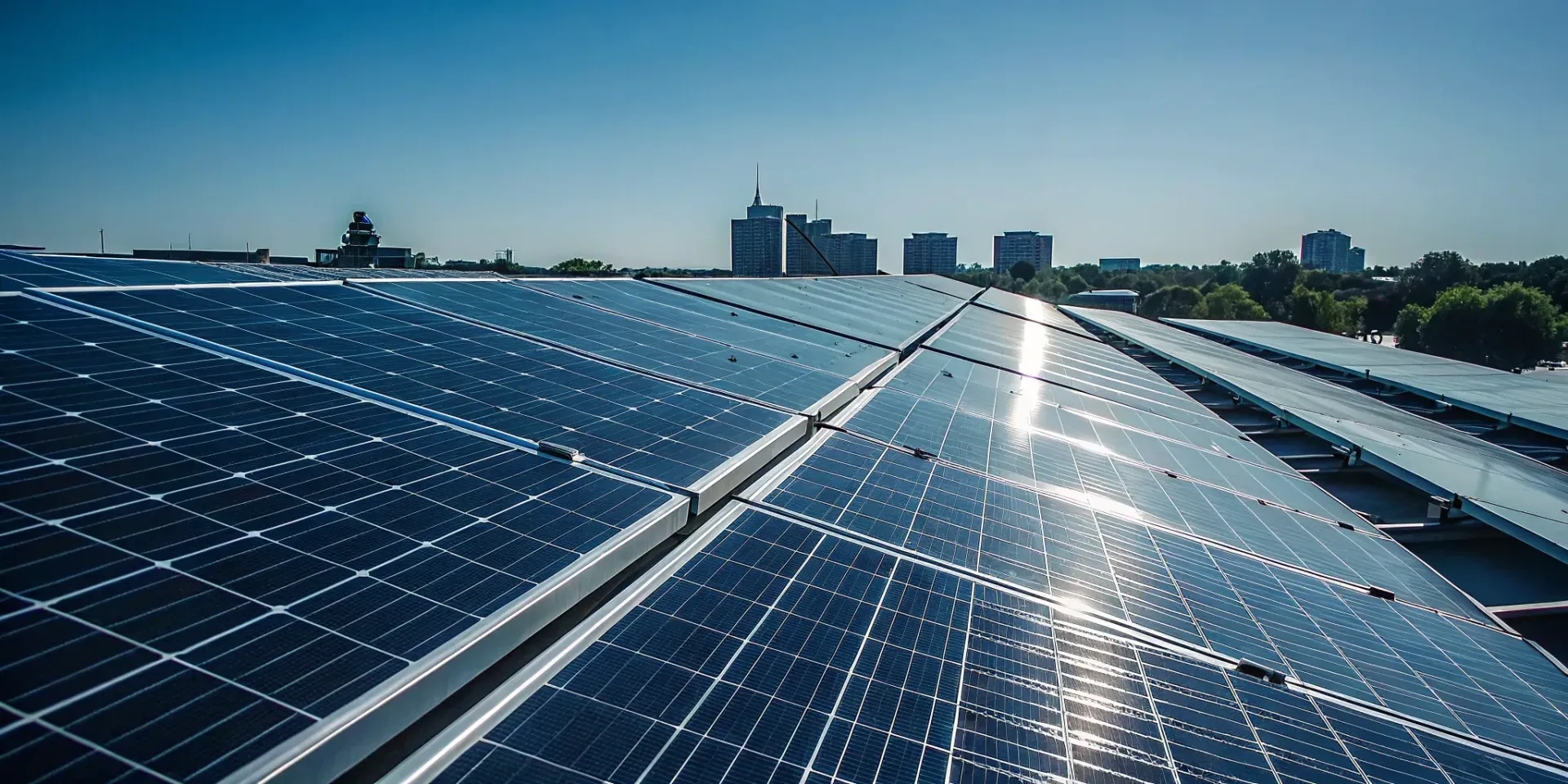
This is the most common type of commercial installation. Rooftop systems use the open, unused space on top of your building, turning your roof into a power-generating asset without taking up valuable ground space. It’s an efficient solution for most flat or pitched commercial roofs.
Ground-mounted systems
If your business has available land, a ground-mounted system can be an excellent choice. These installations are built on racks set in the ground, which allows your solar partner to orient the panels at the perfect angle for maximum sun exposure. This often results in higher energy production and is ideal for businesses with large energy needs.
Solar carports and canopies
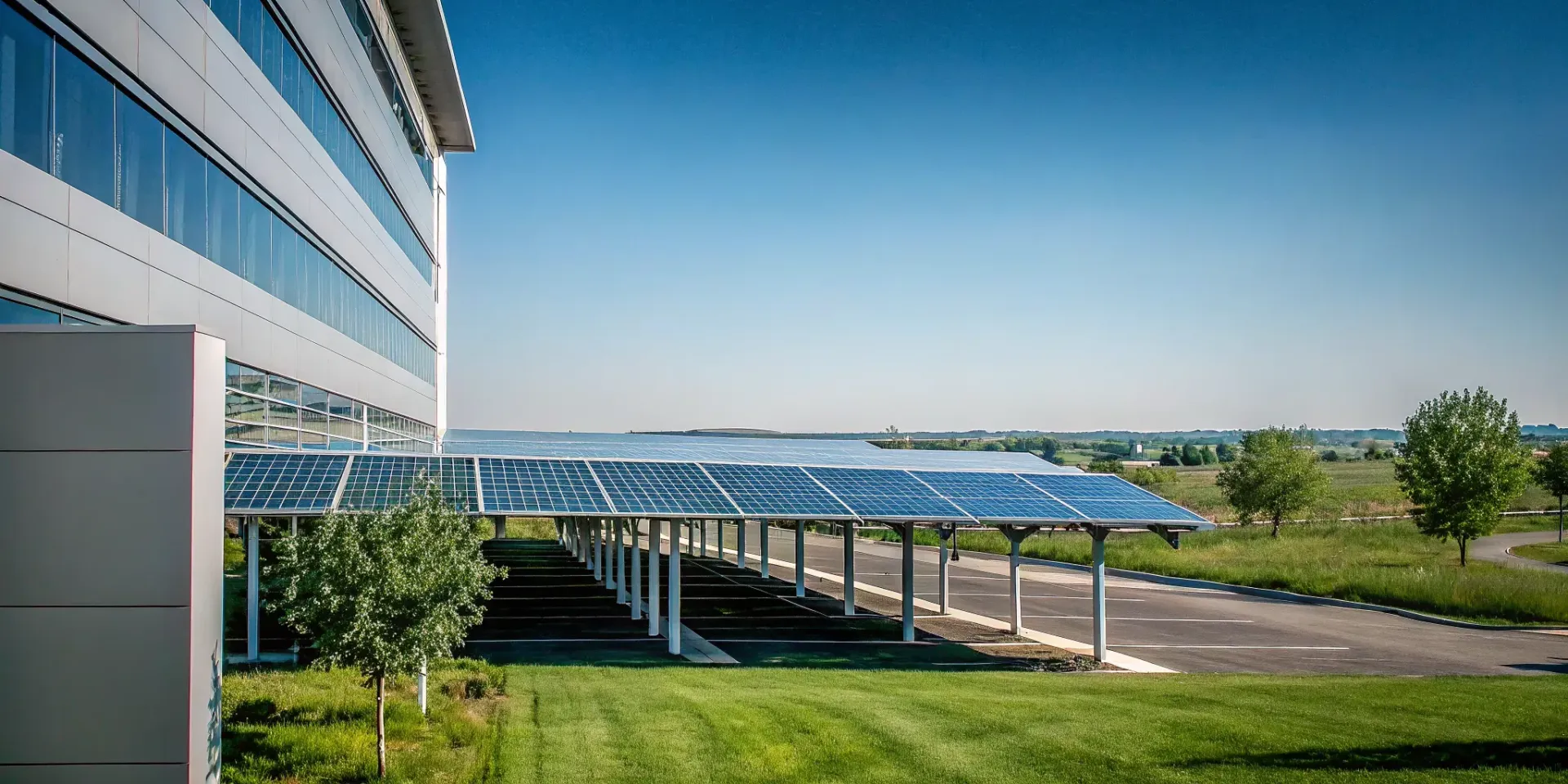
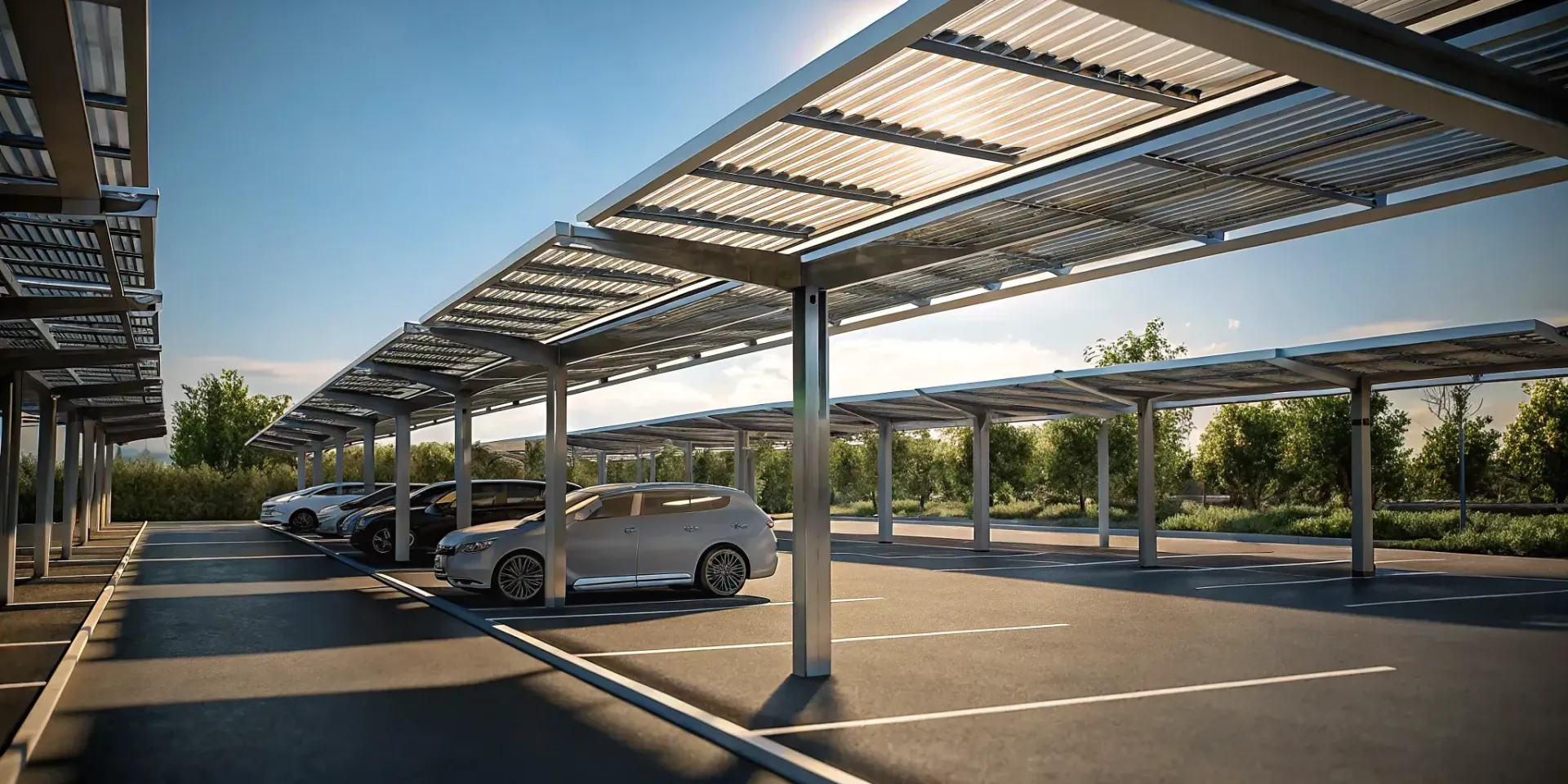
Solar carports and canopies are a brilliant two-for-one solution. They are elevated structures built over parking lots or other open areas that generate clean energy while providing shade and protection for vehicles. This is a great way to utilize existing parking areas and add a valuable amenity for employees and customers.
Grid-tied, off-grid, and hybrid options
Most commercial systems are grid-tied, meaning they remain connected to the local utility. This allows you to draw power from the grid when your solar panels aren’t producing enough (like at night) and send excess power back to it for credit. Off-grid systems operate independently, usually with batteries for energy storage, while hybrid systems combine a grid connection with battery backup for the best of both worlds.
The Business Benefits of Going Solar
Switching your business to solar power is more than just an environmental choice; it’s a strategic financial decision that pays dividends for years to come. From slashing overhead to building a stronger brand, the advantages are clear and compelling. For Kansas businesses, investing in a commercial solar system is a powerful way to take control of your energy future and improve your bottom line. Let's look at the key benefits you can expect when you make the switch.
Reduce your operating costs
One of the most immediate and significant benefits of solar energy is the reduction in your monthly operating expenses. Electricity is a major cost for most businesses, and solar panels can drastically lower or even eliminate your utility bills. A professionally installed solar system is a durable asset that can generate free, clean electricity for 25 to 30 years. This creates substantial long-term savings, freeing up capital that you can reinvest into growing your business, hiring new talent, or improving your products and services. It’s a straightforward way to make your company more resilient and profitable.
Protect your budget from rising energy rates
Utility costs are unpredictable and have a history of increasing over time. These rate hikes can make budgeting a challenge and eat into your profits unexpectedly. By generating your own power, you lock in your electricity costs for decades. This insulates your business from volatile energy markets and gives you predictable, stable expenses you can count on. Most solar energy systems pay for themselves in just a few years, thanks to energy savings and financial incentives. Exploring your financing options can make the initial investment even more manageable, allowing you to start saving right away.
Increase your property value
A commercial solar installation is a significant upgrade that can increase your property’s market value. A building that generates its own power is more attractive to potential buyers and tenants, as it promises lower operating costs from day one. This makes your property a more valuable and marketable asset. Beyond the financial gain, a solar-powered building also enhances your company’s image. It’s a tangible demonstration of your commitment to modern, sustainable practices, which can be a deciding factor for clients, partners, and future investors who value forward-thinking businesses.
Gain energy independence with battery storage
Power outages can bring business operations to a halt, resulting in lost productivity and revenue. Pairing your solar panel system with battery storage gives you true energy independence and operational stability. During the day, your panels power your business while also charging your batteries with any excess energy. If the grid goes down, your battery system automatically kicks in, keeping your lights, computers, and essential equipment running without interruption. This resilience is invaluable for any business that can’t afford downtime, ensuring you can continue serving customers even when the unexpected happens.
Strengthen your brand's reputation
In a competitive market, your company’s reputation is one of your most important assets. Installing solar panels is a visible and powerful way to show your customers, employees, and community that you are committed to sustainability. Consumers are increasingly drawn to brands that share their values, and a clear commitment to renewable energy can build a loyal customer base. Highlighting your solar initiative in your marketing can differentiate you from competitors and strengthen your brand identity as a responsible, modern, and community-focused business. It’s a story that resonates with people and reflects positively on everything you do.
Financial Incentives That Make Solar a Smart Investment
Beyond the long-term savings on your energy bills, a variety of financial incentives can significantly lower the initial cost of a commercial solar installation and shorten your payback period. These programs are designed to make renewable energy more accessible for businesses just like yours. When you combine federal, state, and local benefits, the financial case for going solar becomes incredibly compelling. Let’s walk through some of the most impactful incentives available to Kansas businesses.
The Federal Investment Tax Credit (ITC)
Think of the Federal Investment Tax Credit (ITC) as a major discount on your solar project, courtesy of the federal government. This credit allows you to deduct 30% of the total cost of your solar energy system directly from the federal taxes your business owes. It’s not just a deduction from your taxable income; it’s a dollar-for-dollar reduction in your tax liability. This powerful incentive dramatically reduces the upfront investment required to go solar. The current 30% rate makes this one of the best times to invest, as it directly improves your project's return on investment from day one. You can find more details on how the Federal Investment Tax Credit works from the Department of Energy.
Accelerated depreciation (MACRS)
As a business owner, you’re likely familiar with depreciating assets over time. The good news is that solar energy systems qualify for accelerated depreciation. Under the Modified Accelerated Cost Recovery System (MACRS), you can depreciate the entire cost of your solar system over just five years. This is much faster than the depreciation schedule for many other business assets. By taking larger deductions in the early years of your system's life, you can significantly lower your taxable income and improve your company’s cash flow. This accelerated depreciation is another powerful tool that makes the financial side of a solar investment even more attractive for commercial properties.
Kansas rebates and property tax exemptions
The savings don’t stop at the federal level. Kansas offers its own set of incentives that make going solar even more affordable. While specific programs can change, you can often find state-backed rebates that further reduce your initial installation costs. Even better, Kansas provides a property tax exemption for solar energy systems. This means that even though your new solar array adds significant value to your property, your property tax bill won’t increase as a result. You get all the benefits of a more valuable asset without the extra tax burden. You can explore a complete list of current Kansas solar incentives to see what your business qualifies for.
Net metering policies
What happens when your solar panels produce more electricity than your business is using? With net metering, that excess energy isn’t wasted. Instead, it’s sent back to the utility grid, and you get credits on your electricity bill. Think of it as your electric meter spinning backward. These credits can offset the cost of any electricity you pull from the grid at night or on cloudy days. Effective net metering policies are key to maximizing the financial return of your solar system, as they ensure you get full value for every bit of clean energy you generate. This process can drastically reduce or even eliminate your monthly electricity bills.
Renewable Energy Certificates (RECs)
When your solar system generates clean energy, you’re creating more than just electricity; you’re also creating a positive environmental impact. Renewable Energy Certificates (RECs) are tradable commodities that represent this "green" value. For every megawatt-hour of electricity your system produces, you earn one REC. Your business can then sell these certificates to other companies or utilities that need to meet renewable energy goals. This creates an additional source of revenue from your solar investment, further strengthening its financial return. Selling Renewable Energy Certificates is a great way to add another income stream while demonstrating your commitment to sustainability.
Is Commercial Solar a Good Fit for Your Business?
Deciding to go solar is a significant move for any business, and it’s smart to ask if it’s the right one for you. While solar offers incredible benefits, its value depends on your specific situation. The good news is that figuring this out is pretty straightforward. It comes down to looking at four key areas: your property, your energy usage, your local incentives, and your long-term business goals.
Thinking through these points will give you a clear picture of what a commercial solar investment could look like for your company. It helps you move from wondering if solar works to understanding how it can work for you. Let’s walk through what you need to consider to determine if your business is a strong candidate for making the switch to clean, affordable energy.
Assess your property's solar potential
First things first: is your building a good home for solar panels? You might be surprised to learn that most commercial properties are. Solar systems are versatile and can be installed on various surfaces, including flat or pitched rooftops, open land next to your building, or even as solar carports in your parking lot. The main things to consider are the age and condition of your roof, how much unshaded space you have, and the direction the surfaces face.
While you can get a general idea just by looking, a professional evaluation is the best way to get a definitive answer. An expert can assess your property’s specific characteristics and give you an honest opinion on its solar viability, ensuring you have the right foundation for a successful project.
Analyze your energy consumption
Your company’s electricity bill is one of the biggest clues that you’re ready for solar. Take a look at your utility statements from the last 12 months. Are your costs consistently high? Do they spike during peak hours of the day? Businesses with significant energy expenses, especially those paying high demand charges, often see the quickest and most substantial return on a solar investment.
Understanding your consumption patterns helps a solar provider design a system that meets your specific needs. By generating your own power, you can drastically reduce what you pull from the grid, particularly during those expensive peak times. This analysis is the first step toward creating a predictable energy budget and cutting down your operational costs for good.
Understand local regulations and sun exposure
Here in Kansas, we get plenty of sunshine, making our state a prime location for solar energy production. But great sun exposure is just one part of the equation. The financial side is heavily influenced by federal, state, and local incentives. For businesses, this includes the federal Solar Investment Tax Credit (ITC), accelerated depreciation, and state-specific benefits like property tax exemptions that prevent your property taxes from increasing after you install a solar system.
Understanding these programs is key to calculating your project's total cost and payback period. When you work with a local expert, they can explain all the financing options and incentives available to your business, ensuring you get the maximum financial benefit from your investment.
Align solar with your long-term business goals
Beyond the financial savings, a solar investment can support your company’s broader objectives. Installing solar panels sends a powerful message to your customers, employees, and community that you are a forward-thinking and environmentally responsible brand. For many businesses, this commitment to sustainability becomes a key part of their identity and a competitive advantage.
Think about your brand’s mission. Does it align with innovation and community leadership? Using solar helps you meet environmental goals, strengthen your brand image, and attract talent that shares your values. It’s a tangible way to show that your business is invested in the future, which resonates with today’s conscious consumers and partners who appreciate our commitment to the community.
What to expect during a professional site assessment
If you’ve considered the points above and feel that solar might be a good fit, the next step is a professional site assessment. This is where a solar expert visits your property to gather all the necessary details for a custom proposal. It’s a no-obligation way to get concrete answers about your property’s potential and what a system would look like.
During the assessment, a consultant will evaluate your roof or land, analyze your energy bills, and discuss your business goals with you. From there, they handle everything: the system design, permitting, installation, and long-term maintenance. The goal is to give you a clear, comprehensive plan that outlines the costs, your projected savings, and the entire project timeline, making the process simple and transparent from start to finish.
How to Choose the Right Commercial Solar Partner
Selecting the right company to install your solar system is just as important as choosing the right panels. This isn't just a one-time transaction; it's the beginning of a long-term partnership. You need a team that is reliable, knowledgeable, and genuinely invested in your business's success. A great partner will manage the complexities of the project, from paperwork to installation, allowing you to focus on what you do best: running your business. They should act as your trusted guide, providing clear communication and expert advice at every stage, from the initial consultation through decades of clean energy production.
Think of it like hiring a key member of your leadership team. You wouldn't hire a CFO without checking their references and track record, and the same diligence applies here. You’re looking for a company with proven experience, a comprehensive skill set, and an unwavering commitment to quality. Taking the time to carefully vet your options will pay dividends, ensuring your solar investment is secure, well-managed, and performs optimally for years to come. A rushed decision can lead to installation errors, missed financial incentives, and long-term headaches. Let's walk through what to look for to make sure you find the perfect fit.
Look for experience, certifications, and local expertise
When you’re evaluating solar installers, their experience is a great indicator of their reliability. Look for a company that has been in business for several years and has a strong portfolio of successful commercial projects. Certifications from organizations like the North American Board of Certified Energy Practitioners (NABCEP) also signal a high level of technical expertise and a commitment to industry standards.
Just as important is local expertise. A partner who understands Kansas-specific building codes, permitting processes, and utility company policies can prevent costly delays. They’ll also know how to design a system that maximizes energy production based on our local weather patterns and sun exposure. A company with deep roots in the community is more likely to provide dedicated, long-term support. You can learn more about a company's background and local commitment on their about us page.
Ensure they offer comprehensive services
Your solar partner should be a one-stop shop, managing every aspect of your project from start to finish. This is what’s known as a turnkey solution, and it saves you the headache of coordinating with multiple contractors. A comprehensive provider will handle the initial site assessment, system design, engineering, permit applications, equipment procurement, and installation.
Beyond the initial setup, check if they offer ongoing services. This includes system monitoring to ensure everything is running efficiently and maintenance to keep your panels in top condition. Some full-service installers even provide specialized services like solar panel removal and reinstallation for roof repairs, demonstrating a deep understanding of the entire solar lifecycle. This end-to-end approach ensures a seamless experience and a single point of contact for any questions or needs that arise.
Review warranties, financing, and long-term support
A quality solar installation is backed by strong warranties. You should receive two types: a product warranty from the equipment manufacturer (covering panels and inverters) and a workmanship warranty from the installer. The workmanship warranty is crucial, as it covers any issues related to the installation itself. A confident installer will offer a robust, long-term warranty on their work.
A great partner will also help you make sense of the financial side of things. They should clearly explain all costs and help you explore financing options to find a solution that fits your budget. Finally, consider their plan for long-term support. Will they be available to answer questions or service your system in five, ten, or twenty years? Choose a stable, reputable company that plans to be around for the long haul.
Key questions to ask before you commit
Before signing a contract, it’s smart to have a final list of questions to ensure you’re making a well-informed choice. This is your chance to clarify any remaining details and get a feel for the company’s communication style and transparency. A trustworthy partner will be happy to provide detailed answers and will never pressure you into a decision.
Here are a few key questions to ask:
- Can you provide references from other local businesses you’ve worked with?
- Who will be my main point of contact throughout the project?
- What is the estimated timeline from signing the contract to system activation?
- How do you handle the permitting and inspection process with the city and utility?
- What does your workmanship warranty cover, and for how long?
Take the Next Step Toward Commercial Solar
Making the switch to solar is a significant decision, but it doesn't have to be a complicated one. Once you’ve determined that solar aligns with your business goals, the next step is to find the right partner to guide you through the process. From understanding your financing options to getting a clear picture of your property’s potential, a trusted local expert can help you move forward with confidence. Here’s how you can get started on your commercial solar project.
Why Kansas businesses choose Barkley Solar
When you’re investing in your business’s future, working with a team that understands the local landscape is essential. As a Kansas-based company, we have a deep understanding of the specific regulations, weather patterns, and energy market that affect businesses right here at home. Our team has a proven track record of successful commercial solar installations across a variety of industries, so we know what it takes to design a system that delivers results. We’re not just a service provider; we’re your neighbors, committed to helping our local business community thrive with clean, reliable energy. Our commitment to quality craftsmanship and exceptional service is why so many Kansas businesses trust our team to get the job done right.
Explore your financing options
The cost of a commercial solar system is one of the biggest questions for any business owner, but the financial flexibility available might surprise you. There are several ways to fund your project, making solar more accessible than ever. Options like solar leases and Power Purchase Agreements (PPAs) allow you to benefit from solar energy with little to no upfront cost. You can also secure a traditional loan to purchase your system outright. On top of these flexible financing solutions, powerful government incentives can dramatically lower your total investment. The federal Investment Tax Credit (ITC), for example, allows businesses to deduct a significant percentage of the cost of their solar system from their federal taxes, providing a substantial financial return.
Schedule your complimentary site assessment
The best way to get a clear and accurate picture of your solar potential is with a professional site assessment. This complimentary, no-obligation step is designed to give you all the information you need to make an informed decision. During the assessment, one of our solar experts will visit your property to evaluate your building’s structure, roof condition, and sun exposure. We’ll also analyze your past energy bills to understand your unique consumption patterns. Using this data, we can provide a tailored recommendation for a system that meets your energy needs and financial goals. This is your opportunity to ask questions and get a concrete proposal, complete with projected costs, savings, and a timeline. Contact us today to schedule your free assessment.
Related Articles
- KS Solar Power FAQs | Barkley Solar
- Commercial Solar Company in Wichita, KS | Barkley Solar
- Commercial Solar Installation in Wichita, KS | Barkley
- Wichita's #1 Home for Solar Power | Barkley Solar
- Expert Solar Services in Wichita, KS | Barkley Solar
Frequently Asked Questions
How long will it take for my solar system to pay for itself? This is one of the most common questions, and the answer depends on your specific project. The payback period for a commercial solar system is determined by your initial investment, the amount of energy your system produces, and your electricity savings. Thanks to powerful financial incentives like the 30% federal tax credit and accelerated depreciation, many Kansas businesses see a return on their investment in just a few years. During your complimentary site assessment, we can give you a detailed financial projection based on your property and energy usage.
Do commercial solar panels require a lot of maintenance? Not at all. Solar panels are built to be incredibly durable and require very little upkeep. They have no moving parts and are designed to withstand the Kansas weather for decades. For most systems, occasional cleaning to remove dust or debris is all that's needed to keep them performing at their best. Plus, modern monitoring software allows us to keep an eye on your system's health remotely, so if an issue ever does arise, we can address it quickly.
What happens when it's cloudy or at night? Will my business lose power? Your business will continue to run seamlessly, day or night. Most commercial solar systems are grid-tied, which means you remain connected to the local utility. During the day, you use the clean energy your panels produce. At night or on very cloudy days, you simply draw power from the grid as you normally would. For businesses that need uninterrupted power, we can also design a hybrid system with battery storage that keeps your essential operations running even during a grid outage.
Will the installation process disrupt my daily business operations? We understand that you can't afford downtime. Our professional installation team works efficiently and safely to minimize any impact on your business. Most of the work happens on your rooftop or on an unused portion of your property, well away from your employees and customers. We coordinate with you every step of the way and schedule the work to be as unobtrusive as possible, ensuring a smooth process from start to finish.
What if my roof is old or I don't have enough space for panels? This is a great question, and it's something we check during our initial assessment. If your roof needs repairs or isn't suitable for an installation, we'll let you know upfront. However, a challenging roof doesn't mean you can't go solar. If your business has available land, a ground-mounted system can be a fantastic alternative. We can also design solar carports for your parking lot, which generate power while providing valuable shade for vehicles. We specialize in finding the right solution for every unique property.